Forget the hype and the hundred-dollar-a-dozen tour balls for a moment. For the vast majority of golfers, the secret to a straighter, longer, and more enjoyable round isn’t in a complex, multi-layered marvel—it’s hiding in plain sight. We’re talking about 2 piece golf balls, the unsung workhorses of the golf world that deliver incredible performance without punishing your wallet.
These balls are engineered for a simple, beautiful purpose: to help you hit the ball farther and straighter. They are forgiving, durable, and designed to maximize distance, especially for those of us who don’t swing like a tour pro. But which ones actually deliver?
We’re diving deep into the most comprehensive robot testing data available to separate the contenders from the pretenders. No marketing fluff, just pure, unbiased performance metrics to help you find the perfect ball for your game.
At a Glance: What You Need to Know
Short on time? Here are the key takeaways from our deep dive into the world of two-piece golf balls.
- Engineered for Distance & Forgiveness: The simple two-layer construction (a large core, a firm cover) is designed to minimize spin, which helps reduce slices and hooks while maximizing yardage off the tee.
- Ideal for Most Amateurs: If you have a slow-to-moderate swing speed, are a beginner, or a high-handicapper, a 2-piece ball is almost certainly the right choice for your game.
- Robot Testing Reveals the Truth: Independent testing by Today’s Golfer and the Sports Technology Institute at Loughborough University provides unbiased data on which balls perform best across different swing speeds.
- Top Performers Stand Out: Models like the Bridgestone e12 Speed (best all-around), Titleist Tour Soft (best short-game spin), and Callaway Warbird (great for slower swings) lead the pack based on data, not just marketing.
- Value is Unbeatable: Two-piece balls offer the best performance-per-dollar in golf, allowing you to play a high-quality, consistent ball without the fear of losing a $5 investment in the woods.
What Exactly Is a 2-Piece Golf Ball?
It’s elegantly simple. Unlike the more complex (and expensive) balls on the market, a two-piece ball has just two core components. Think of it like a grape.
- The Core: This is the engine of the ball. It’s a single, large sphere of solid synthetic rubber. A larger, softer core is easier to compress, which is fantastic for golfers with slower swing speeds who need help generating ball speed and distance.
- The Cover: This is the tough outer skin. It’s typically made from a resilient material like Surlyn or an ionomer. This cover is incredibly durable—it resists cuts and scuffs from errant wedge shots or encounters with a cart path—and its firmness helps reduce spin.
This straightforward construction results in a ball with a specific set of performance characteristics: low compression, low spin, and high durability. It’s a formula that delivers exactly what most amateur golfers need most.
Why the Robot Test Is Your Secret Weapon
Opinions are great, but data is undeniable. That’s why we lean on the results of the most exhaustive golf ball test on the planet. For their 2025 test, Today’s Golfer, in partnership with the experts at Loughborough University and Ping, put 62 different golf ball models through the wringer.
Using a state-of-the-art swing robot and a Foresight GCQuad launch monitor, they collected 2,232 data points. They tested every ball at slow, medium, and fast swing speeds to replicate the performance for real-world amateur golfers. Of the 62 models tested, 21 were two-piece balls.
This isn’t about what a pro feels; it’s about what a ball does. The robot removes human error, giving us a pure, unbiased look at launch angle, spin rates, carry distance, and peak height. This is the ground truth you can trust.
The Winners’ Circle: Top-Performing 2-Piece Golf Balls
Based on the rigorous robot testing, several models rose above the rest. Here’s a breakdown of the standouts and what makes them special.
Bridgestone e12 Speed: The All-Around Champion
If you want one ball that does everything well, this is it. The Bridgestone e12 Speed was the undisputed king of the two-piece category, earning a gold medal for its outstanding tee-to-green performance across all three tested swing speeds. It provides a fantastic combination of distance off the tee and enough feel and control for approach shots. For the golfer who doesn’t want to compromise, the e12 Speed is the clear front-runner.
Titleist Tour Soft: The Short-Game Specialist
It’s a common myth that all two-piece balls feel like rocks and offer zero control around the greens. The Titleist Tour Soft single-handedly shatters that misconception. It was the only two-piece ball in the test to generate over 6,000 rpm of spin on a 50-yard pitch shot, recording an impressive 6,075 rpm. If you want the distance and forgiveness of a two-piece ball but refuse to sacrifice your touch around the greens, the Tour Soft is in a class of its own.
Callaway Warbird Distance+: Best for Moderate & Slow Swings
The Warbird is a legendary name in the distance ball category, and the latest version lives up to its heritage. It excelled in the slow and medium swing speed tests, delivering exceptional distance. What was truly surprising, however, was its short-game performance. It clocked the second-highest wedge spin in the two-piece category (5,963 rpm), making it an incredibly well-rounded option for players who don’t swing out of their shoes.
Mizuno RB 566: The Approach-Shot Ace
Mizuno is known for precision engineering, and the RB 566 is no exception. Its unique 566 dimple pattern is designed to keep the ball in the air longer for extended carry. The robot test backed this up, but where it truly shined was on approach shots. It generated impressive spin with a 7-iron (4,947 rpm), helping shots hold the green more effectively than many of its peers.
Other Notable Performers
- Titleist Velocity: If your number one priority is pure, unadulterated distance, look no further. The Velocity is an absolute rocket off the tee and was the longest of Titleist’s two-piece offerings.
- Maxfli StraightFli: As the name suggests, this ball is designed to fly straight. It delivered some of the longest tee shots in the test but showed a significant drop-off in short-game spin, making it a pure distance play.
- TaylorMade Distance+: A solid performer on approach shots, but it produced the lowest short-game spin of any ball in the entire 62-ball test (a mere 3,685 rpm). It’s great from 150 yards out, but you’ll need to rely on bump-and-runs around the green.
2-Piece vs. 3-Piece: What’s the Real Difference?
The golf ball aisle can be a confusing place. The most common question golfers ask is about the difference between ball constructions. The debate over 2-piece vs. 3-piece golf balls is a constant topic of conversation in clubhouses everywhere.
Here’s the simple breakdown:
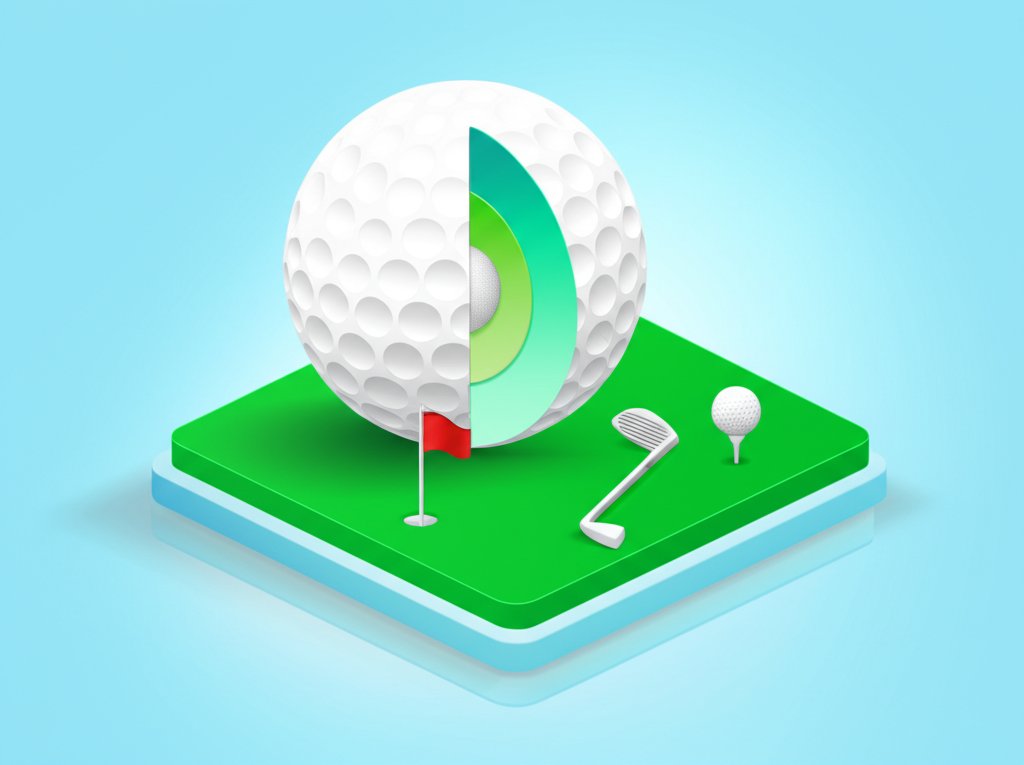
- 2-Piece Balls: Have a core and a cover. They are built for low spin, high durability, and maximum distance, especially at slower swing speeds. They are the most affordable option.
- 3-Piece Balls: Add a “mantle” layer between the core and the cover. This extra layer allows engineers to create a ball that’s both soft on the inside (for distance off the driver) and firm on the outside (for high spin on wedge shots). This design offers more control and a softer feel.
Essentially, the mantle layer is what gives premium balls their “tour-level” performance, particularly around the greens. If you’re interested in the technology, you can Discover three-piece golf balls and start to see how that extra layer changes performance.
So, which is better? Neither. They’re just built for different players. If you need to reduce your slice and add 15 yards to your drive, the 2-piece is your friend. If you’re a skilled player who can shape shots and needs maximum spin to stop the ball on a dime, you’ll benefit more from Understanding 3-layer golf balls. For elite players, there are even more complex options; you can also Discover four-piece golf balls which add another layer for even more refined performance.
Answering Your Key Questions
Let’s tackle some of the most common questions and misconceptions about two-piece golf balls.
Are 2-piece golf balls just for beginners?
Absolutely not. They are for anyone who prioritizes distance and forgiveness over high spin and workability. Many mid-handicap and even some low-handicap golfers who struggle with a slice or hook prefer a two-piece ball off the tee because its low-spin characteristics help keep the ball in play.
Do 2-piece balls really go farther?
For the majority of amateur golfers with slow to average swing speeds, the answer is a definitive yes. The low-spin construction reduces backspin and sidespin off the driver, creating a more penetrating ball flight that runs out farther upon landing. A tour ball, with its high-spin characteristics, can actually rob a slower-swing-speed player of distance.
Why are two-piece balls so much cheaper?
The simple construction is the key. With only two components and less complex materials, the manufacturing process is faster and more cost-effective. That savings is passed directly on to you, the golfer.
Can a low-handicapper play a 2-piece ball?
Of course. A skilled golfer can play well with any ball. However, they will likely notice a significant difference in performance around the greens. While they may enjoy the extra distance and straighter flight off the tee, they will have to adjust their short game to account for less spin and more rollout on chips and pitches.
Finding the Right Ball for Your Game
Choosing a golf ball shouldn’t be a random guess. The data from the robot test gives you a massive advantage. Armed with this knowledge, you can move beyond marketing and find the ball that truly complements your swing and your goals.
Start by being honest about your game.
- What is your biggest weakness? If you constantly fight a slice, a low-spin two-piece ball is your best friend.
- What is your typical swing speed? If you’re not swinging over 95-100 mph with your driver, a two-piece ball is likely to give you more distance than a premium ball.
- What’s your budget? If you play courses with a lot of water or out-of-bounds, playing an affordable and durable ball removes the stress of losing an expensive one.
Based on the robot test, you can now make an educated choice. Need an all-around star? Grab the Bridgestone e12 Speed. Crave more bite on your chips? The Titleist Tour Soft is for you. Once you’ve narrowed it down, buy a sleeve of two or three different models and test them on the course. Pay attention to how they perform not just off the tee, but with your irons and around the green.
By matching the right technology to your game, you’re not just buying a golf ball; you’re buying confidence, better scores, and a more enjoyable experience on the course. You can explore the full range of the Best 2-piece Golf Balls to find the perfect fit.

Whether testing new equipment or exploring the world’s best courses, I'm brings fresh, easy-to-understand content that makes golf accessible for everyone. Follow along and elevate your game with expert advice, every day.
- Best 2 Piece Golf Balls Robot Tested for Every Golfer - April 29, 2026
- Golf Ball Brands: Navigating the Best Choices for Your Game - April 28, 2026
- Golf Ball Sleeves for Sale Offer Perfect Gift and Trial Options - April 27, 2026