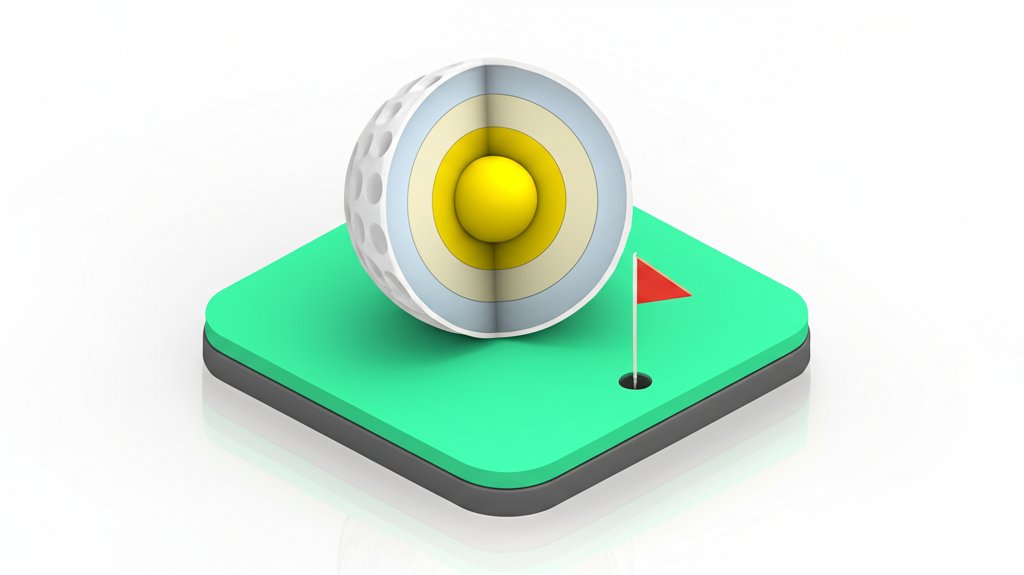
You’re standing in the golf aisle, staring at two boxes of golf balls. One promises piercing distance, the other tour-level spin. This is the heart of the golf ball 2 piece vs 3 piece debate, a choice that goes far beyond a simple layer count. It’s about matching the ball’s engineering to your swing to unlock better scores, and understanding the trade-offs is the first step to playing smarter, not just harder.
The right ball won’t fix a bad swing, but the wrong one can definitely punish a good one. Let’s break down the real-world differences so you can choose with confidence.
At a Glance: Key Takeaways
- Core Difference: A 2-piece ball has a large core and a cover. A 3-piece ball adds a “mantle” layer between the core and cover.
- Performance Trade-Off: 2-piece balls are built for low spin and high durability, promoting straighter, longer shots. 3-piece balls are engineered for higher spin and softer feel, offering superior control around the greens.
- Who Plays What: Beginners and high-handicappers benefit most from the forgiveness of 2-piece balls. Mid-to-low handicappers often need the precision of 3-piece balls to attack pins.
- The Bottom Line: Choosing isn’t about which is “better,” but which is better for you. Your primary miss and on-course needs should dictate your choice.
The Anatomy of a Golf Ball: What’s Actually Inside?
Before we talk performance, let’s look under the hood. The materials and construction of each layer are what create those distinct flight characteristics. Think of it like building a car: every component has a specific job.
The 2-Piece Formula: Engine and Shell
Simple, powerful, and efficient. A 2-piece ball is the workhorse of the golf world, designed with two primary components that work in perfect harmony for a single goal: maximizing distance and durability.
- The Core (The Engine): This is a large, solid sphere of synthetic rubber. Its size is its superpower. A bigger core allows for a massive transfer of energy at impact, which translates directly into higher ball speed. It’s engineered to compress and rebound with maximum force, especially on high-speed shots like your driver.
- The Cover (The Shell): This outer layer is typically made from a tough, resilient material called an ionomer, with Surlyn being the most famous trade name. This hard shell serves two purposes: it’s incredibly durable (resisting scuffs from cart paths and trees), and its firm nature helps reduce spin. Less backspin and side spin off the driver means a straighter, more penetrating ball flight.
This straightforward design is why 2-piece balls are so effective at what they do. They are built for speed and forgiveness, making them a fantastic choice for a huge segment of the golfing population. These traits are why many mid-to-high handicappers find massive success with this design. If that sounds like your game, check out Our Best 2-Piece Golf Ball Guide where we robot-tested the top options.
The 3-Piece Formula: Engine, Transmission, and Tires
If a 2-piece ball is a muscle car built for the drag strip, a 3-piece ball is a performance sports car built for a winding road course. It introduces a critical middle layer that allows for more nuanced performance through the bag.
- The Core (The Engine): Still made of synthetic rubber, the core in a 3-piece ball is often a bit smaller to make room for the other layers. Its compression can be fine-tuned to work with the mantle.
- The Mantle (The “Transmission”): This is the game-changer. Sandwiched between the core and cover, this thin layer of firm resin or surlyn acts as an intermediary. On high-speed driver shots, it works with the core to keep spin low for distance. But on low-speed, high-loft wedge shots, it interacts with the soft outer cover to ramp up spin dramatically. This layer is what gives a 3-piece ball its “dual personality.”
- The Cover (The “Tires”): The cover on a premium 3-piece ball is almost always made of urethane, a much softer and “grippier” material than the ionomer used on 2-piece balls. Think of it like high-performance racing tires. This soft material allows the sharp grooves of your wedges to bite into the ball at impact, creating thousands of RPMs of backspin. This is the magic behind those “hop-and-stop” approach shots you see on TV.
How Construction Translates to On-Course Performance
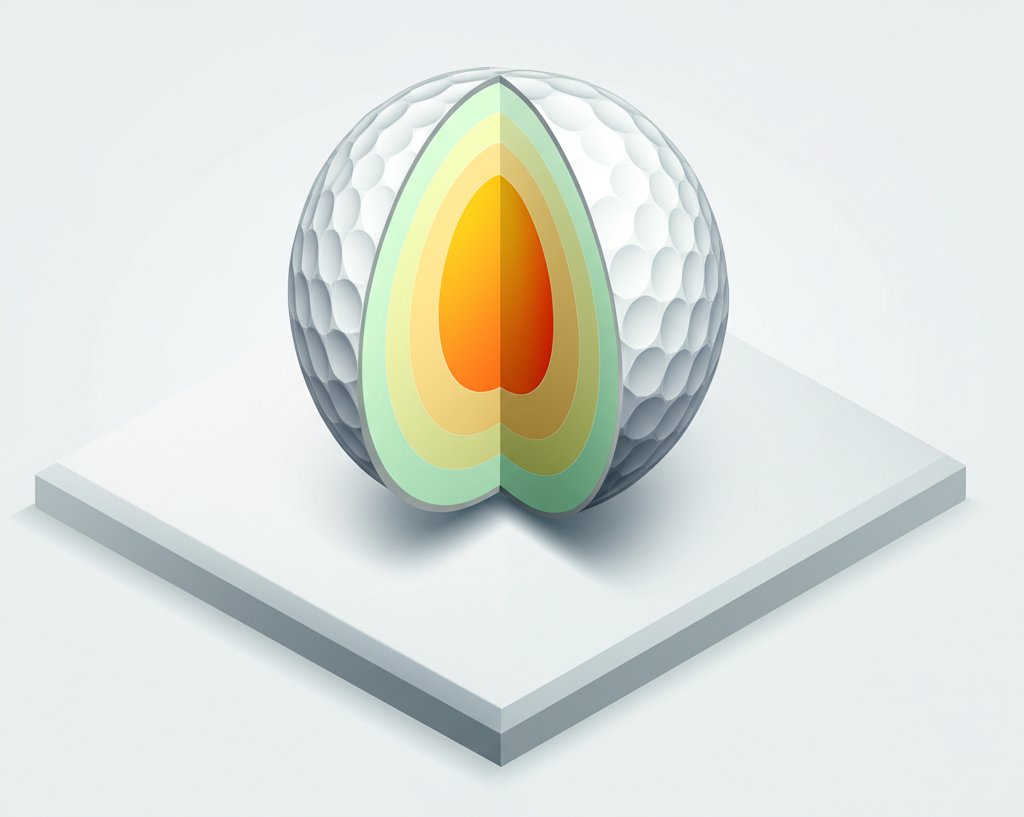
Understanding the layers is one thing; knowing how they’ll affect your shot on the 15th hole is what really matters. Here’s a direct comparison of the golf ball 2 piece vs 3 piece dilemma across key performance metrics.
| Feature | 2-Piece Golf Ball | 3-Piece Golf Ball | Why It Matters for Your Game |
|---|---|---|---|
| Driver Spin | Low | Low to Mid | A 2-piece ball’s low spin profile minimizes side spin, which makes your slice or hook less severe. It promotes a straighter flight. |
| Wedge Spin | Low | High | A 3-piece ball’s high wedge spin is crucial for stopping the ball quickly on the green, especially on firm, fast surfaces. |
| Feel | Firm to Soft | Soft to Very Soft | “Feel” is subjective, but the soft urethane cover of a 3-piece ball provides more feedback and a “plusher” sensation on chips and putts. |
| Durability | Very High | Moderate to High | The tough ionomer cover on a 2-piece ball can take a beating from trees and cart paths without scuffing or cutting easily. |
| Trajectory | Higher, more launch | More penetrating, player-dependent | 2-piece balls are often designed to launch higher, helping slower swing speeds gain carry distance. |
| Price | Lower ($15-$30 / dozen) | Higher ($30-$55+ / dozen) | If you lose a few balls per round, the cost-effectiveness of a 2-piece ball is a significant advantage. |
Matching the Ball to Your Game (Not Your Ego)
The most common mistake golfers make is choosing a ball played by their favorite tour pro, assuming it will help their game. In reality, it often does the opposite. The best ball for you is the one that complements your strengths and minimizes your weaknesses.
The Case for the 2-Piece Golf Ball
You should seriously consider playing a 2-piece ball if you fit one of these profiles:
- The High-Handicapper or Beginner: Your primary goal is to keep the ball in play. The low-spin characteristics of a 2-piece ball are your best friend. It won’t eliminate your 40-yard slice, but it can easily turn it into a more manageable 25-yard fade, keeping you out of the trees and in the fairway.
- The Golfer Seeking Maximum Distance: If your swing speed is average or below (under 95 mph), you will likely get more total distance from a lower-compression 2-piece ball. Its design is optimized for ball speed and roll, helping you squeeze out every last yard.
- The Budget-Conscious Player: Let’s be practical. Golf is expensive. If you play courses with a lot of water or out-of-bounds, losing a $2 ball stings a lot less than losing a $5 one. Plus, their superior durability means you can play the same ball for multiple rounds without significant wear.
Case Snippet: Mark, a 20-handicap, was playing a premium 3-piece ball because he thought it was “the best.” He struggled with a big slice off the tee. After switching to a low-spin 2-piece ball, he didn’t gain 30 yards, but he started hitting 3-4 more fairways per round. His scores dropped by five strokes almost immediately simply because he was playing his second shot from the short grass.
When to Upgrade to a 3-Piece Golf Ball
Moving to a 3-piece ball is a strategic decision that should be based on a specific need in your game. You’re ready for an upgrade if:
- You Need “Stopping Power”: This is the number one reason to switch. You have enough consistency to hit the green, but your approach shots roll out 20 feet past the pin or off the back. The high spin from a 3-piece urethane ball will give you the control to fly the ball to the hole and have it stop quickly.
- You Prioritize Feel and Feedback: You are a player who wants precise feedback on short shots. The soft feel of a urethane cover gives you a better sense of how the ball is coming off the clubface on delicate chips, pitches, and putts, often leading to better distance control.
- You Intentionally Shape Shots: If you have the skill to hit controlled draws and fades, the slightly higher spin of a 3-piece ball will respond more readily, allowing you to work the ball around doglegs and into tight pin locations.
Case Snippet: Sarah, a 10-handicap, was a great ball-striker, but her scores stalled because she couldn’t get her approach shots close. On her course’s firm summer greens, her 8-iron would land on the green and release 30 feet. By switching to a 3-piece ball, her shots started to land, take one hop, and stop. This ability to attack pins turned frustrating pars into legitimate birdie opportunities.
Quick-Fire Q&A: Your Top Questions Answered
Let’s tackle some of the most common misconceptions in the golf ball 2 piece vs 3 piece discussion.
Is a 3-piece ball always better than a 2-piece ball?
Absolutely not. “Better” is entirely relative to the golfer. A 2-piece ball is objectively better for a high-handicapper who needs to reduce side spin. A 3-piece ball is better for a skilled player who needs greenside stopping power. Using the wrong ball for your game is a recipe for frustration.
Will a 3-piece ball give me more distance?
For most amateur golfers, the answer is no. In fact, the opposite is often true. If your swing speed is not high enough to fully compress a firmer, multi-layer tour ball, you will lose energy transfer and distance. Furthermore, the extra driver spin some 3-piece balls generate can cause the ball to balloon and fall short, especially when hitting into the wind.
What about 4-piece and 5-piece golf balls?
These are highly advanced, tour-level constructions. Each additional layer is designed to fine-tune spin rates through the bag—for example, one layer optimizes mid-iron spin while another controls wedge spin. This level of precision is only beneficial for the most consistent and highest-speed players (think 110+ mph driver speed). For 95% of golfers, they introduce unnecessary cost and complexity.
How has technology changed the 2-piece vs. 3-piece debate?
Modern R&D is blurring the lines. Some new 2-piece balls now feature incredibly soft cores and improved cover designs to provide a much better feel than the “rock-hard distance balls” of the past. Conversely, companies like Bridgestone use advanced mantle technology (like their REACTIV iQ cover) to create 3-piece balls that are exceptionally low-spin off the driver but still rip back on wedge shots. The number of pieces is a starting point, but the specific performance claims on the box are more important than ever.
Your Simple 2-Step Decision Framework
Feeling overwhelmed? Don’t be. You can solve the golf ball 2 piece vs 3 piece puzzle with two simple steps.
Step 1: Honestly Assess Your Game’s #1 Weakness
Forget what you want your game to be and focus on what it is right now.
- If your biggest problem is wildness off the tee (slices/hooks)…
Your priority is finding the fairway. Start with a 2-piece, low-spin golf ball. Forgiveness is king. Taming that side spin will save you more strokes than anything else. - If your biggest problem is your approach shots not holding the green…
You have the consistency to get there, but you lack control. Test a 3-piece urethane golf ball. The added greenside spin is the specific technology you need to unlock lower scores.
Step 2: Test on the Course, Not Just the Range
The final answer isn’t in an article; it’s on the course. Buy one sleeve of each type of ball that fits your profile from Step 1. Play nine holes with one, and nine with the other. Pay close attention to two specific shots:
- Your Tee Shot: Which ball finds the fairway (or the first cut) more often? Don’t just look at the one perfect drive; look at the average result.
- A 50-Yard Pitch: Go to a practice green. Hit ten shots with each ball. Which one lands and stops closer to where you intended? The difference can be startling.
Trust the evidence of your own eyes. The ball that gives you more fairways and more control on approach shots is the right ball for you right now. As your game evolves, you can always re-evaluate, but for today, choose the one that makes golf easier and more fun.

Whether testing new equipment or exploring the world’s best courses, I'm brings fresh, easy-to-understand content that makes golf accessible for everyone. Follow along and elevate your game with expert advice, every day.