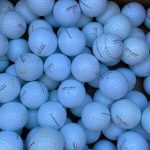
That fresh dozen of premium golf balls feels great at the register, but the feeling sours when you send two of them into the woods on the front nine. Suddenly, you’re paying over $8 per hole in lost balls. There’s a smarter way to play without compromising on quality: buying a bag of golf balls that have been recycled. This isn’t about fishing scuffed-up rocks from a pond; it’s about accessing top-tier brands like Titleist, Callaway, and TaylorMade at a fraction of the cost, letting you focus on your swing, not your wallet.
At a Glance: Your Guide to Buying Used Golf Balls
- Decode the Grades: Understand what Mint (5A), Near Mint (4A), and Good (3A) really mean for on-course performance.
- Match Ball to Skill: Learn how to align the right grade and model with your handicap and budget for maximum value.
- Know the Difference: Discover why recycled balls are superior to “refurbished” balls that have been repainted.
- Avoid Common Pitfalls: Get practical tips for inspecting your order and ensuring you get what you paid for.
- Save Big: See how buying in bulk can cut your golf ball spending by as much as 90% compared to retail prices.
More Than Just “Used”—Understanding the A-Grade System
When you buy a used bag of golf balls from a reputable seller, you’re not getting a random assortment. Each ball has been hand-inspected and sorted into a clear grading system. Knowing this system is the key to getting a fantastic deal instead of a bag of duds.
Think of it like buying a pre-owned car. You wouldn’t just ask if it “runs.” You’d want to know the mileage, condition, and service history. This grading system is the service history for your golf ball.
Mint (5A): For the Tournament Player on a Budget
This is the highest quality you can get. A Mint or 5A ball is virtually indistinguishable from a brand-new one right out of the sleeve. It may have been hit once or twice or was simply lost early in its life.
- What to Expect: Perfect gloss and color. No scuffs, blemishes, or discoloration. The only potential marks are tiny player pen markings or a corporate/team logo.
- Who It’s For: The low-handicap or competitive golfer who demands tour-level performance but shudders at paying $55 for a dozen Pro V1s.
- The Trade-off: You’re still paying a premium compared to lower grades, but you’re getting a ball that’s 99.9% new for a 30-40% discount. X-Out and Practice models are never included in this grade.
Case Snippet: Sarah, a 4-handicap golfer, plays in her club championship every year. She loves the feel of a Bridgestone Tour B XS but can’t justify the cost. She buys a bag of 50 Mint (5A) Tour B XS balls for the price of about 2.5 new dozen, getting the exact performance she needs for her tournament rounds.
Near Mint (4A): The Sweet Spot for Most Regular Golfers
This is the workhorse grade and where most golfers find the absolute best value. A Near Mint ball is like one you’ve played for 1-3 holes. It’s no longer perfect, but its performance characteristics are completely intact.
- What to Expect: Still has its original shine but may have very minor cosmetic imperfections. Think a small cart path scuff that doesn’t break the paint, a slight blemish, or minor discoloration. These flaws are purely cosmetic and will not affect the ball’s flight, distance, or spin.
- Who It’s For: The vast majority of golfers, from weekend warriors to dedicated players with mid-range handicaps (roughly 8-20).
- The Trade-off: You sacrifice that “perfect out of the box” look for a massive 50-70% savings. Like 5A, this grade does not contain X-Out or Practice balls.
Good (3A): The Smart Choice for Casual Rounds and Practice
A 3A ball has seen some action. It’s been played for several holes and shows it. While it won’t look pretty, it’s a perfectly playable ball without any major damage that would affect its core flight characteristics.
- What to Expect: Moderate surface stains, scuffs, and discoloration are common. The key is that they won’t have any deep cuts or gouges. This grade may include higher-quality “Practice” and “X-OUT” models, which are often a hidden gem.
- Who It’s For: High-handicappers, beginners, or anyone looking for a cheap ball for a casual round or for honing their skills on the practice range. If you lose 3-4 balls a round, using 3A balls takes the sting out of a wayward drive.
- The Trade-off: You’re giving up aesthetics entirely. These balls look used, but they fly true. It’s the ultimate utility ball.
Don’t Just Buy Cheap—Buy Smart

Choosing the right grade is more than just finding the lowest price. It’s about matching the ball’s condition to your game’s demands. Buying a bag of golf balls that are too worn-down can be just as wasteful as overspending on premium new ones.
The Beginner’s Dilemma: AA Grade vs. 3A
Many sellers offer a lower AA Grade, which has significant cosmetic issues—heavy scuffs, discoloration, and blemishes. They are extremely cheap and tempting for new players.
Our advice: Skip the AA Grade for on-course play. While they’re fine for hitting in a field where you won’t retrieve them, their compromised aerodynamics can create inconsistent flight. A beginner needs consistency to learn. Start with a Good (3A) grade instead. You get a ball that performs reliably at a price that won’t make you cry when you lose it.
The Mid-Handicapper’s Choice: Balancing Cost and Consistency
For the golfer who plays regularly and has a decent feel for their game, the Near Mint (4A) grade is the undisputed champion. It offers predictable performance round after round.
At this stage, you also face a choice: buy a mixed bag of brands or stick to one model?
| Purchase Type | Pros | Cons |
|---|---|---|
| Mixed Bag (4A) | Extremely high value. Lets you sample different premium balls (e.g., Pro V1, Chrome Soft, TP5) to find a favorite. | Inconsistent feel and spin from shot to shot. |
| Single Model (4A) | Total consistency. You know exactly how the ball will react off the driver, irons, and putter. | Slightly more expensive than a random mix. |
| Choosing the right grade and model is just one part of a larger strategy for saving money. If you want a complete framework for buying in bulk, you can Score deals on used golf balls and find a plan that works for you. |
The Low-Handicapper’s Edge: Is 5A Worth It?
If your handicap is in the single digits, you notice the subtle differences in spin and compression. For you, consistency is everything. While a 4A ball will fly just as far, a 5A Mint ball guarantees that “fresh from the sleeve” spin and feel around the greens.
The value proposition is still incredible. A bag of 50 Mint (5A) Titleist Pro V1s might cost what you’d pay for 2 dozen new ones at retail—giving you an extra 26 tour-quality balls for free. For a serious player, that’s a budget-friendly way to never have to compromise on equipment.
From Cart to Course: A Playbook for Your First Purchase

Ready to pull the trigger? Follow these simple steps to ensure you buy the right bag of balls the first time.
Step 1: The Honest Golfer Check-in
Before you even browse, answer these questions honestly:
- What is my real handicap? Be truthful. This is the biggest factor.
- How many balls do I lose per round? If it’s more than three, 3A or 4A is your starting point.
- What is my budget? Set a price per ball you’re comfortable with (e.g., under $1.50).
- Do I care about looks? If a scuff mark bothers you, stick to 5A. If not, 4A is your friend.
Step 2: Choose Your Grade with This Quick Guide
- If your handicap is 20+ or you’re a casual golfer: Start with a Good (3A) bag.
- If your handicap is between 8 and 20: Buy Near Mint (4A). It’s the best blend of performance and value.
- If your handicap is 7 or lower: Invest in Mint (5A) for tournament-ready performance.
Step 3: Pick a Model or a Mix?
- To discover your preference: Buy a mixed bag of premium brands (Titleist, Callaway, Bridgestone, TaylorMade) in your chosen grade.
- For ultimate consistency: If you already have a favorite ball, buy a bag of that specific model (e.g., Callaway Chrome Soft, 4A Grade).
Step 4: Inspect on Arrival
When your bag of golf balls arrives, don’t just dump it in your golf bag. Grab 10-15 balls at random and inspect them.
- Do they generally match the grade description you paid for?
- Are there any cracked or severely damaged balls? (Reputable sellers will replace these).
- Remember, you’re not looking for perfection in 4A or 3A grades. You’re looking for consistency and playability.
Quick Answers to Common Questions
Are recycled golf balls the same as refurbished ones?
Absolutely not, and this is a critical distinction.
- Recycled/Used: These balls are found, washed, and sorted by condition (grade). Their original cover and construction are completely intact.
- Refurbished: These balls are stripped of their original paint, repaired for scuffs, and then repainted and rebranded. This process can significantly alter the ball’s aerodynamics, compression, and feel. We strongly recommend sticking with recycled balls.
Do used golf balls lose distance?
For high-quality grades, the loss is negligible. A study by Golf.com confirmed that a golf ball stored in a stable, moderate temperature can maintain its performance characteristics for many years. The primary factor in distance loss is surface damage (scuffs and cuts) that disrupts airflow. The grading system is specifically designed to sort out balls with performance-altering damage. A 5A or 4A ball will fly virtually identically to a new one.
Can I play used balls in a tournament?
Yes. As long as the ball is on the USGA Conforming Golf Ball List, it is legal for tournament play. The only rule to be mindful of is the “One Ball Rule,” which requires you to use the exact same brand and model of ball for the entire round. This is easy to follow if you buy a single-model bag of golf balls but can be an issue if you’re using a random mix.
What’s the deal with “X-OUT” and “Practice” balls?
These are hidden gems often found in 3A grade bags. They are brand new balls that were flagged at the factory for a minor, purely cosmetic blemish—like a paint smudge, an off-center logo, or a slight imperfection in the clear coat. They have zero performance defects and are identical in construction to their full-price counterparts.
Your Next Move: Stop Overpaying for Golf Balls
Switching to a used bag of golf balls isn’t about being cheap; it’s about being strategic. It’s a simple, powerful way to allocate more of your budget to things that will actually improve your game, like lessons or greens fees, without ever sacrificing the quality of the equipment you play.
Your first step is simple. Based on your game, pick a grade and give it a try. For most players, a bag of 4A Near Mint balls in your favorite brand or a premium mix is the perfect starting point. You’ll get over 90% of the performance and feel of a new ball for less than half the price. It’s the easiest win in golf.

Whether testing new equipment or exploring the world’s best courses, I'm brings fresh, easy-to-understand content that makes golf accessible for everyone. Follow along and elevate your game with expert advice, every day.
- Bag of Golf Balls Great Deals on Recycled Balls - March 31, 2026
- 100 Used Golf Balls: Score a Great Deal Today - March 31, 2026
- Experience Estrella Golf Club: A Nicklaus Gem in the Arizona Desert - March 30, 2026