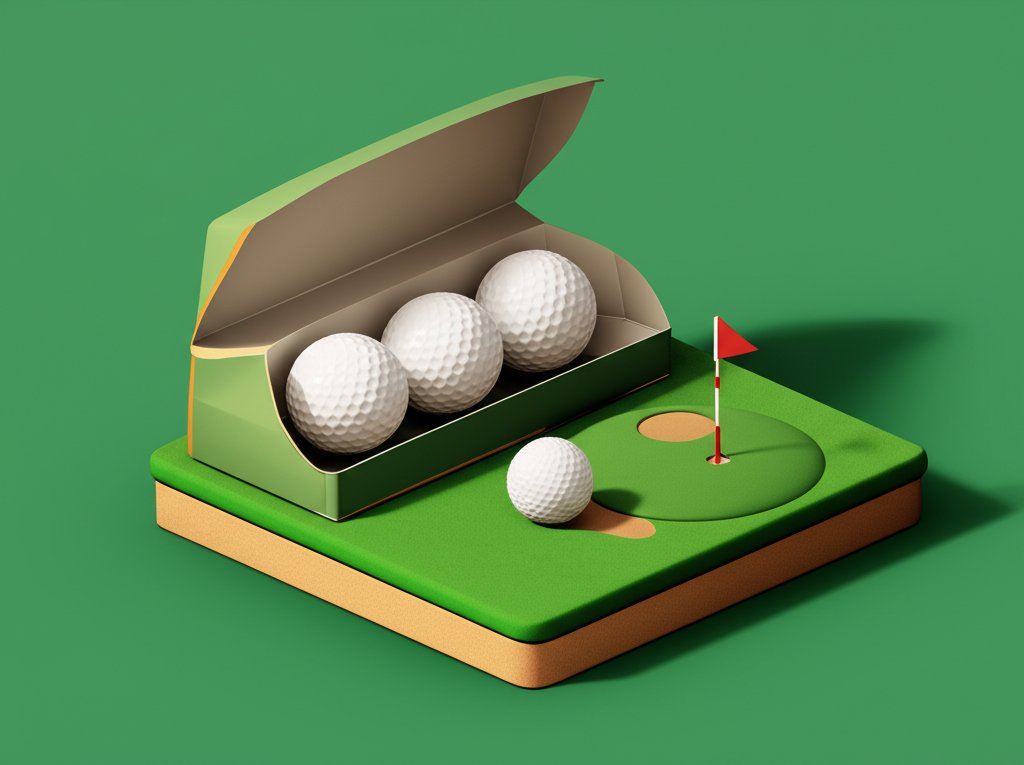
You’re standing on the first tee, sun warming your back, the fairway unfolding before you. You reach into your golf bag, pull out a ball, and place it on the tee. But as you take your practice swing, a question bubbles up: Is this actually the right ball for my game? For many golfers, the answer is a shrug. We play what we find, what we’re given, or what the pros use. But the single greatest secret to unlocking consistency and confidence isn’t a new driver; it’s finding the perfect golf ball. The best way to start that journey is with a single sleeve of golf balls.
Buying a sleeve—typically three balls—is the ultimate low-risk, high-reward experiment. It’s a chance to test-drive cutting-edge technology, feel the difference in spin around the greens, and see if a few extra yards are hiding in a different dimple pattern, all without committing to a full, expensive dozen. This guide is your caddie, helping you navigate the options to find the sleeve that will truly make a difference in your game.
At a Glance: Your Quick Guide to Choosing a Sleeve
Don’t have time to read the full breakdown? Here are the key takeaways to get you started:
- Test Before You Invest: A sleeve is the smartest way to try a new golf ball. Play a full round with one model to gauge its performance from tee to green.
- Know Thyself (and Thy Swing): Your swing speed and typical miss are the most crucial factors. Slower swings need softer, lower-compression balls to maximize distance.
- Distance vs. Control: Two-piece balls are built for distance and durability. Multi-layer “tour” balls offer superior spin and control for players who can generate it.
- The Cover Matters: A soft urethane cover grabs the clubface for high spin on wedges. A firmer ionomer (or Surlyn) cover spins less, promoting a straighter, longer ball flight.
- Don’t Overbuy for Your Skill Level: Using a high-spin pro-level ball when you’re a high-handicapper can actually exaggerate slices and hooks. Forgiveness is key for most amateurs.
Why a Sleeve is Your Secret Weapon on the Course
Think of a sleeve of golf balls as a sampler pack. You wouldn’t buy a case of a new craft beer without trying a single can first, right? The same logic applies here. A dozen premium golf balls can be a significant investment, and discovering on the third hole that they feel like rocks off your clubface is a frustrating (and expensive) lesson.
A sleeve empowers you to be a smarter, more methodical golfer. It lets you conduct your own on-course research. How does this ball react with your driver? Does it check up on the green with a wedge? How does it feel coming off the putter face? Answering these questions with a three-ball test run provides invaluable feedback. The components Inside a sleeve of balls are your tools for a day of discovery, helping you dial in your equipment to match your unique swing.
Decoding the Dimples: What Really Matters in a Golf Ball

The golf ball market is flooded with technical jargon: “aerodynamic dimple designs,” “high-energy cores,” “mantle layers.” It’s easy to get lost. Let’s cut through the noise and focus on the four factors that will have the biggest impact on your game.
1. It Starts With You: Matching a Ball to Your Skill Level
Before you even look at a box, you need to be honest about your game. The “best” ball is entirely subjective and tied to your ability.
- For Beginners & High-Handicappers: Your primary goals are distance, durability, and forgiveness. You want a ball that minimizes side spin (which causes slices and hooks) and gives you maximum carry. Look for two-piece balls with low compression and a firm cover.
- For Intermediate Golfers (Mid-Handicappers): You’re starting to develop more consistency and feel. You need a ball that offers a blend of distance off the tee and better control on approach shots. Three-piece balls are often the sweet spot here.
- For Advanced Players & Low-Handicappers: You can shape shots and demand precision. You need a ball that provides maximum spin and control around the greens, allowing you to stop the ball quickly. Multi-layer (3, 4, or 5-piece) balls with a soft urethane cover are your best bet.
2. The Anatomy of a Golf Ball: From Core to Cover
What’s inside the ball dictates how it performs. The construction is a balancing act between speed and spin.
- Two-Piece Balls: The workhorses. They feature a large, solid core and a durable cover. This simple construction is all about transferring energy efficiently for high velocity and low spin, which translates to more distance and a straighter flight. They are perfect for beginners and budget-conscious players.
- Multi-Layer Balls (3, 4, or 5 pieces): The artist’s tools. These complex balls have a core and multiple intermediate layers (mantles) under the cover. Each layer is designed for a specific purpose. For example, a firm mantle might reduce spin on a driver, while the soft outer cover grabs a wedge for high spin. This separation of performance is what allows skilled players to get distance off the tee and control around the green.
3. Spin Control: The Key to Sticking Your Approaches
Spin is your friend—and your enemy. Too much spin off the driver can send the ball ballooning or curving offline. Not enough spin with a wedge means your ball will roll off the back of the green. The ball’s cover is the primary arbiter of spin.
- Softer Covers (Urethane): This is the premium material used on tour-level balls like the Titleist Pro V1 and Vice Pro. Urethane is a soft, flexible polymer that squishes against the grooves of your short irons and wedges, generating massive amounts of backspin for that coveted “drop-and-stop” action.
- Firmer Covers (Ionomer/Surlyn): This is a much more durable and slicker material. Because it doesn’t grip the clubface as much, it produces significantly less spin. For a driver, this is great news—less backspin and less side spin means more roll and a straighter shot.
4. Feel & Compression: Finding Your “Just Right”
“Feel” is a personal preference, but it’s largely dictated by compression. Compression is a measure of how much a golf ball deforms at impact, rated on a scale from about 30 (very soft) to 120 (very firm). Think of it like a spring: a lower compression ball is easier to “activate.”
- Low Compression (Below 80): These balls feel soft and are ideal for golfers with slower swing speeds (under 90 mph). A slower swing can fully compress the core, launching the ball effectively for maximum distance.
- High Compression (90 and above): These balls feel firmer and are designed for golfers with faster swing speeds (over 105 mph). A fast swing has enough force to activate the firm core, resulting in explosive distance. Using a high-compression ball with a slow swing is like trying to bounce a basketball that isn’t fully inflated—you lose energy and distance.
Our Top Picks: The Best Sleeves for Every Golfer
Armed with that knowledge, let’s look at some of the best sleeves on the market and who they’re built for.
For the Everyday Golfer Seeking Feel and Precision: Titleist TruFeel 2025
For the vast majority of amateur golfers, the Titleist TruFeel is a fantastic starting point. It’s engineered to be Titleist’s softest ball, but it doesn’t sacrifice performance. Its new, softer 3.0 TruFlex cover provides excellent feel and enhanced spin on short shots, helping you hold more greens.
The aerodynamic dimple design creates a low, penetrating flight, which is great for fighting through wind and getting predictable distance. It’s a versatile ball that delivers the quality feel Titleist is known for without requiring tour-level swing speeds.
For Maximum Distance and a Straighter Flight: Bridgestone e12 Contact
If your main goal is to hit longer, straighter shots, the Bridgestone e12 Contact sleeve should be in your bag. Its standout feature is the innovative CONTACT FORCE DIMPLE technology. These unique dimples have a raised area in the center, creating 38% more surface contact between the ball and the clubface at impact.
This hyper-efficient energy transfer means more ball speed off the driver and less side spin on mishits. The result is a ball that wants to fly straight and far. It’s an excellent choice for players who struggle with a slice or hook and want to find more fairways.
For the Advanced Player Craving Speed and Spin: Vice Pro White
Vice has made a name for itself by offering tour-level performance at a more accessible price point. The Vice Pro White is a three-piece ball with a cast urethane cover designed for advanced golfers with medium-to-fast swing speeds.
Its High Energy Speed Core is built to maximize velocity for impressive driver distance. But its true strength lies around the greens. The soft urethane cover delivers maximum wedge spin, giving you the stopping power you need to attack pins. It’s a ball that offers a complete tee-to-green performance package.
For the Indoor Warrior and Serious Competitor: Titleist Pro V1X Left Dash RCT
The rise of indoor golf simulators has created a need for specialized equipment. The Titleist Pro V1X Left Dash RCT (Radar Capture Technology) is engineered specifically for this environment. It’s built with an internal radar-reflective marker that helps launch monitors like TrackMan capture spin data with near-perfect accuracy.
On the course, it’s a bomber. It offers very low spin in the long game for a penetrating trajectory and longer distance than the standard Pro V1x. It still retains that signature drop-and-stop short game control, making it a favorite for serious, high-speed players who demand precision both indoors and out. Considering its premium nature, testing a sleeve first is highly recommended.
For the Golfer Who Has Everything (and a Sense of Humor): Shanker Golf Exploding Balls
Let’s be clear: this isn’t for your club championship. The Shanker Golf Exploding Ball sleeve is pure, unadulterated fun. This sleeve of three prank balls looks and feels just like the real thing until the moment of impact, when it vanishes into a massive cloud of white, non-toxic smoke.
It’s the perfect gag gift for a golf trip, a charity scramble, or that friend who takes their game a little too seriously. Just make sure you have a camera ready to capture the moment.
Putting It All Together: Your Decision-Making Checklist

Ready to choose? Follow these simple steps to find the right sleeve for you.
- Assess Your Swing Speed (Honestly): If you don’t know it, use a rangefinder with a swing speed feature, visit a golf simulator, or use a simple rule of thumb: if you hit your driver around 200 yards, your speed is likely slow-to-average. If you’re hitting it 250+, you’re in the faster category.
- Define Your #1 Goal: Are you desperate for more distance? Do you need to stop the ball faster on the greens? Or do you just want a ball that feels good and flies straight? Prioritize one main objective.
- Consider Your Budget: A sleeve of golf balls can range from a few dollars to over $15. How much is a sleeve is a great question to ask as you set your expectations. Premium, multi-layer balls will cost more, but you can find incredible value in two-piece and direct-to-consumer models.
- Buy One or Two Sleeves to Test: Pick two different models that seem like a good fit. For example, try a distance-focused ball like the Bridgestone e12 and a feel-focused ball like the Titleist TruFeel.
- Conduct a Fair Test: Don’t just hit a few balls on the range. Play a full 18 holes with one model. Then, play your next round with the other. Switching balls hole-to-hole will muddy the results. Pay attention to how each ball performs with your driver, irons, wedges, and putter. The winner will be clear.
Frequently Asked Questions About Golf Ball Sleeves
How many golf balls are in a sleeve?
A standard sleeve of golf balls almost universally contains three balls. A dozen-pack, or a standard box, is typically made up of four of these sleeves.
Can I mix and match different balls during a competitive round?
According to the Rules of Golf (Rule 6.3a), you must complete a hole with the same ball you started it with, unless it is lost or damaged. However, you are permitted to switch to a different brand or model of ball between holes. For consistency’s sake, most serious golfers stick with one model for the entire round.
Are expensive, tour-level golf balls always better?
Not at all. “Better” is relative to the player. An expensive, high-spin, high-compression ball is only “better” in the hands of a golfer with the swing speed and skill to take advantage of its features. For a beginner, that same ball can lead to shorter drives (from too much backspin) and bigger slices (from too much side spin).
Does a scuffed or scratched golf ball affect performance?
Absolutely. The aerodynamic integrity of a golf ball is critical. A significant scuff or cut disrupts the airflow over the dimples, which can cause the ball to fly unpredictably—often shorter and with erratic spin. If your ball has a noticeable gash, it’s best to take it out of play.
Find Your Perfect Match and Play Your Best Golf
The humble sleeve of golf balls is one of the most powerful and underutilized tools for game improvement. It’s an invitation to experiment, to learn about your own game, and to finally match your most-used piece of equipment to your unique swing. Stop guessing and start testing.
The right ball won’t fix a bad swing, but it will absolutely optimize a good one. It will reward your best shots with a few extra yards, a little more spin, and the confidence that comes from knowing your equipment is working for you, not against you. Now that you’re armed with this knowledge, you can confidently Shop golf ball sleeves and find the one that unlocks your best game.

Whether testing new equipment or exploring the world’s best courses, I'm brings fresh, easy-to-understand content that makes golf accessible for everyone. Follow along and elevate your game with expert advice, every day.
- Best Sleeve Of Golf Balls To Elevate Your Game - April 23, 2026
- Used Pink Golf Balls to Elevate Your Style and Game - April 22, 2026
- Personalized Pink Golf Balls Elevate Any Event or Special Gift - April 21, 2026