That flash of white arcing against a bright, cloudy sky—and then it’s gone. You spend the next three minutes pacing the fairway, hunting for a ball that vanished into thin air. Choosing lime green golf balls isn’t just about solving this frustrating problem; it’s a strategic move to gain a performance edge, from the tee box to the green. They stand out, speed up play, and, surprisingly, come with the same sophisticated technology as their traditional white counterparts.
This isn’t about novelty. It’s about using color as a tool to improve focus and results.
At a Glance: What You’ll Learn
- Visibility is Performance: Understand why the specific wavelength of lime green light makes it easier for your eyes to track against grass, sky, and rough.
- Match Construction to Your Skill: Decode the difference between 2-piece, 3-piece, and 4-piece balls to find the perfect match for your handicap and goals.
- The Feel Factor: Learn how a ball’s cover—urethane versus Surlyn—directly impacts spin, control, and durability.
- Swing Speed is Key: Discover why your swing speed is the most critical factor in selecting a ball that maximizes your distance and accuracy.
- Top Models Compared: Get a practical breakdown of leading options like the Vice Pro series, Callaway Supersoft, and Zero Friction Spectra.
More Than Just a Bright Idea: Why Lime Green Works
Your eye is naturally drawn to high-contrast colors, and lime green is a champion in most golf course environments. It pops against the deep greens of the fairway, the muted browns of the rough, and the bright blue of the sky. This immediate visual lock reduces the mental strain of tracking your shot and drastically cuts down on time spent searching for errant balls.
When you find your ball faster, you maintain your rhythm and focus on the next shot, not the last one. And losing fewer balls isn’t just good for your scorecard and wallet; it’s a simple way to contribute to a healthier course environment. When you leave fewer abandoned balls behind, you help keep the landscape pristine. To understand the full environmental impact of your choices, Explore green golf ball benefits and see how smarter selections lead to cleaner courses.
Decoding the Dimples: How Lime Green Balls Are Constructed

Beneath that vibrant lime green shell lies a complex engine designed for flight, feel, and spin. The number of layers—or “pieces”—in a golf ball is the primary determinant of its performance characteristics. Think of it as the difference between a simple, powerful tool and a sophisticated, multi-function device.
The 2-Piece Workhorse: For Distance and Durability
The simplest construction features a large, solid rubber core and a tough outer cover. This design is all about energy transfer.
- How it Works: On impact, the massive core compresses and rapidly expands, launching the ball with high velocity and low spin. The firm cover, typically made of a resilient material called Surlyn, is cut-proof and built to last.
- Who It’s For: Golfers with slower to moderate swing speeds, beginners, and anyone whose main goal is to maximize distance off the tee. The lower spin also helps reduce the severity of slices and hooks.
- Prime Example: The Zero Friction Spectra is a classic 2-piece ball. Its matte lime green finish is a standout feature, cutting glare on sunny days to further enhance visibility. It’s an affordable, durable option focused on getting you from tee to green reliably.
The 3-Piece Performer: A Blend of Feel and Power
Here, we add a crucial middle layer—the mantle—between the core and the cover. This extra layer allows designers to fine-tune performance, creating a ball that’s both long off the tee and responsive around the greens.
- How it Works: The core still provides the distance, but the mantle layer helps control spin. On long shots with a driver, it keeps spin low. On short shots with a wedge, it works with the soft urethane cover to generate high spin for stopping power.
- Who It’s For: A wide range of golfers, from mid-handicappers to advanced players. This construction offers the best of both worlds: great distance without sacrificing the soft feel and greenside control needed for scoring.
- Prime Example: The Vice PRO SOFT (Lime) is a perfect 3-piece model for players with medium and lower swing speeds who crave a buttery feel and exceptional spin on approach shots.
The 4-Piece Elite: Maximum Control for Advanced Players
The most complex construction, a 4-piece ball often features a dual-core or a dual-mantle system. Each layer is engineered for a specific task, providing a level of precision that skilled golfers can exploit.
- How it Works: A soft inner core and a firm outer core work together to deliver high ball speed with low driver spin. The inner and outer mantle layers then manage spin through the rest of the bag, culminating in maximum spin with wedges.
- Who It’s For: Advanced players with high swing speeds (typically over 105 mph). These golfers have the speed to activate all the layers and the skill to use the nuanced spin control to their advantage.
- Prime Example: The VICE Golf PRO Plus (Lime) is built for speed. Its 4-piece design is engineered to give fast swingers maximum driver distance while providing the exacting spin control needed to attack tight pins.
The Feel Factor: Urethane vs. Surlyn Covers
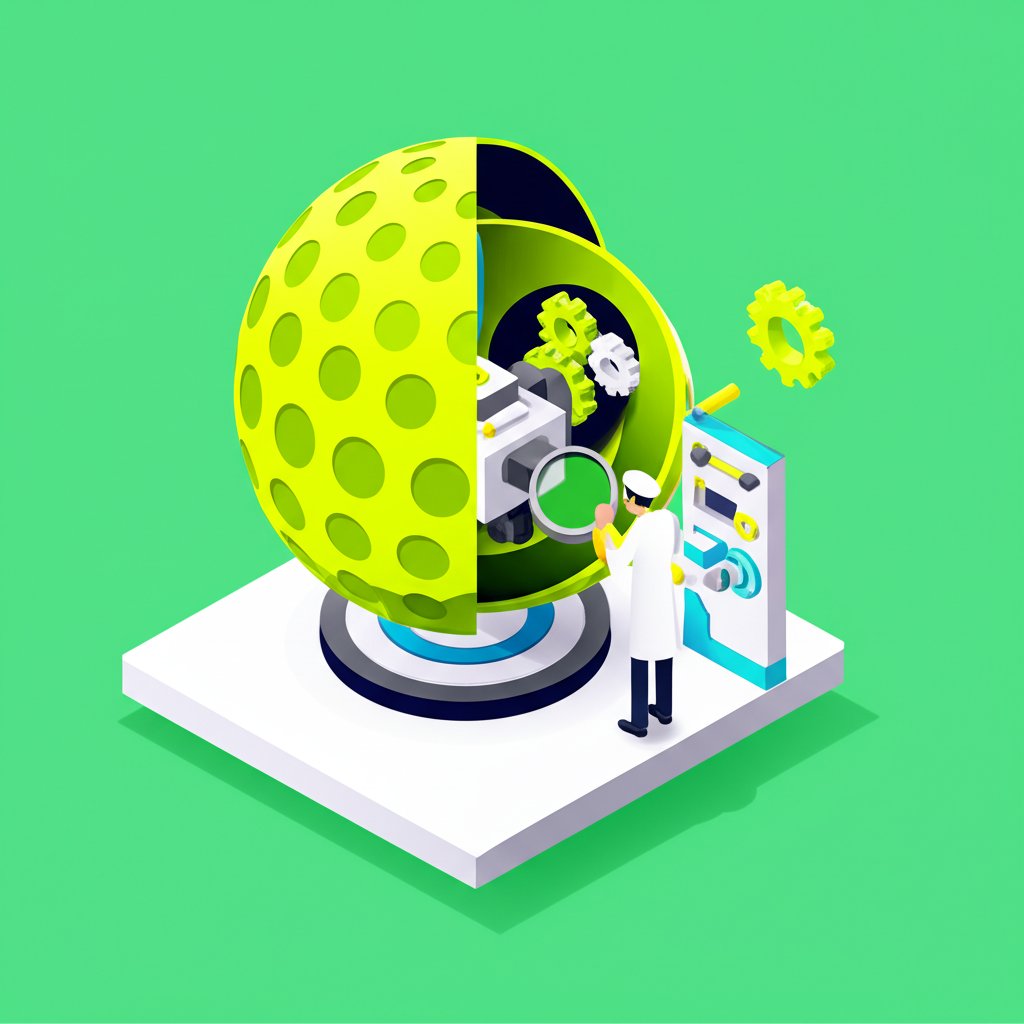
The material of the golf ball’s cover is your direct point of contact. It dictates both how the ball feels off the clubface and how it interacts with the grooves on your wedges.
| Feature | Cast Urethane Cover | Surlyn (Ionomer) Cover |
|---|---|---|
| Feel | Very soft, “buttery” | Firmer, “clicky” |
| Greenside Spin | High | Low |
| Driver Spin | Can be higher if not managed by inner layers | Generally lower, which can reduce slices/hooks |
| Durability | Lower (can scuff on cart paths or with wedges) | Very high (extremely resistant to cuts and scrapes) |
| Cost | Higher (premium) | Lower (value-oriented) |
| Best For | Players seeking maximum control and stopping power. | Players seeking maximum distance and durability. |
| Practical Scenario: Imagine you have a short pitch over a bunker to a tight pin. A urethane-covered ball, like the Vice Pro (Neon Lime), will allow you to hit a shot that lands, checks up, and stops quickly. With a Surlyn-covered ball, you’d need to plan for the ball to land and release, rolling out several feet farther. |
A Practical Guide to Matching a Ball to Your Game
Choosing the right lime green golf ball isn’t a random guess. Follow this simple framework to make an informed decision that will translate to better scores.
Step 1: Know Your Swing Speed (Honestly)
This is the most crucial piece of the puzzle. You can get measured on a launch monitor at a local golf shop, but you can also estimate based on your driver distance (carry).
- Low (< 90 mph): You likely carry your driver under 220 yards. You need a low-compression, soft ball to maximize distance.
- Medium (90-105 mph): Your driver carry is in the 220-260 yard range. You have the most options and can choose based on feel and spin preference.
- High (> 105 mph): You carry your driver over 260 yards. You need a firmer, multi-layer ball to control spin and maximize your speed.
Using a ball that’s too firm for your swing speed is like trying to hammer a nail with a sponge—you lose energy and distance. Using one that’s too soft for a fast swing can lead to excessive spin and a loss of control.
Step 2: Define Your Priority: Distance or Control?
What part of your game needs the most help?
- If you need more distance: Prioritize a 2-piece construction with a Surlyn cover. The Callaway Golf Supersoft (Green) is an excellent choice, engineered with a special core to boost ball speed and maximize yardage for a wide range of players.
- If you need more greenside control: Look for a 3-piece or 4-piece ball with a cast urethane cover. The Vice Pro (Neon Lime), with its extra-thin urethane cover, is designed specifically for this purpose, offering incredible bite on short shots.
Step 3: Consider Your Budget and Play Style
Be realistic. If you tend to lose a couple of balls per round, playing a premium, $5-per-ball model can get expensive.
- Premium Performance: Brands like Vice offer direct-to-consumer pricing that makes their high-performance urethane balls more accessible.
- Value-Focused: Models like the Zero Friction Spectra offer fantastic durability and visibility at a fraction of the cost, making them a smart choice for casual rounds or players on a budget.
Quick Answers to Common Questions
Q: Are lime green golf balls harder to see in the fall?
A: They can be. Against a backdrop of yellow and orange autumn leaves, a lime green ball may blend in. For fall golf, a bright optic pink or blue ball might offer better contrast. However, for the majority of the golf season, lime green is a top-tier visibility choice.
Q: Does the color of a golf ball affect its flight?
A: No. The performance of a golf ball is dictated entirely by its internal construction, cover material, and dimple aerodynamics. The color is simply a pigment added to the final paint layer and has zero effect on how the ball flies, spins, or rolls. A Vice Pro Neon Lime performs identically to its white counterpart.
Q: Is a matte finish better than a gloss finish for visibility?
A: This often comes down to personal preference, but matte finishes have a distinct advantage: they don’t produce a reflective glare in direct sunlight. This can make the ball easier to track in the air on bright days and simpler to spot when it’s sitting in the grass.
Q: Can I use lime green golf balls in a tournament?
A: Absolutely. As long as the ball model is on the USGA and R&A Conforming Golf Ball List, its color is irrelevant for competition rules. All reputable manufacturers, including Vice, Callaway, and Zero Friction, ensure their balls are fully conforming for tournament play.
The next time you tee it up, don’t just grab any ball from your bag. Making a deliberate choice to play a lime green golf ball can sharpen your focus and improve your performance. It’s not just about finding your ball more easily after you hit it; it’s about choosing a piece of equipment that is precisely engineered to help you hit it better in the first place. Assess your game, select the model that fits your swing, and watch your confidence—and your scores—improve.

Whether testing new equipment or exploring the world’s best courses, I'm brings fresh, easy-to-understand content that makes golf accessible for everyone. Follow along and elevate your game with expert advice, every day.
- Lime Green Golf Balls Boost Your Game Performance and Visibility - April 17, 2026
- Matte Green Golf Balls For Enhanced Visibility During Your Round - April 16, 2026
- Green Golf Balls Help Keep Courses and Landfills Cleaner - April 15, 2026