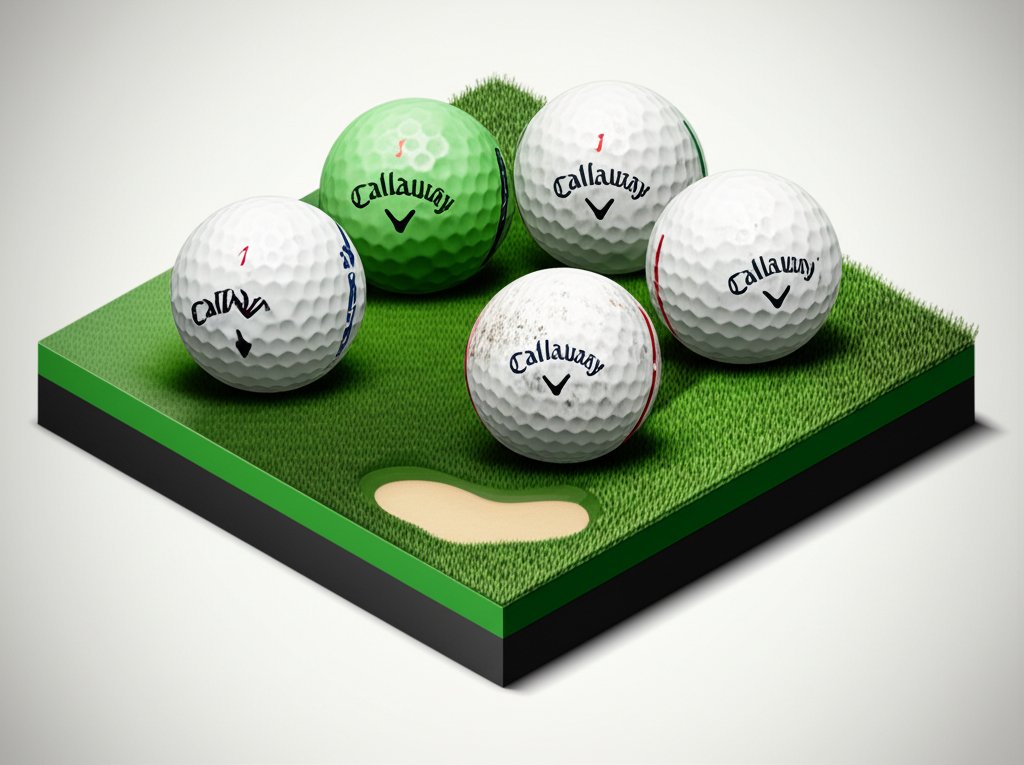
There’s a unique sting that comes from watching a brand-new, five-dollar Callaway Chrome Soft sail out of bounds on the first tee. You paid for premium tour performance, and it lasted one swing. This is precisely why savvy golfers are turning to used Callaway golf balls. They offer a way to play the exact same high-performance ball you trust, but at a fraction of the cost, eliminating the financial pain of an errant shot.
This isn’t about playing scuffed-up rocks found in the woods. It’s about accessing top-tier technology—the same HEX aerodynamics and multi-layer construction—for the price of a mid-range ball. You get the performance without the premium price tag.
At a Glance: Your Guide to Buying Used Callaways
Here’s what you’ll be able to do after reading this guide:
- Decode the Grading System: Understand the real-world difference between AAAAA (Mint), AAAA (Near Mint), and AAA (Good) quality balls.
- Match the Right Model to Your Game: Choose the best used Callaway, from Chrome Soft to Supersoft, based on your skill level and budget.
- Buy with Confidence: Learn where to find reliable sellers and how to spot the red flags, especially the “refurbished” trap.
- Calculate the True Value: See how much you can save without a meaningful drop in on-course performance.
- Avoid Common Mistakes: Steer clear of pitfalls that lead to a bag full of duds.
The Smart Golfer’s Secret: Why Used Callaway Balls Make Sense
Let’s be honest: every new golf ball becomes a “used” golf ball after a single strike. The difference between that first hit and a ball retrieved from a pond, cleaned, and graded is often minimal, especially at the highest grades. Reputable retailers of used golf balls simply professionalize this cycle, offering a sustainable and incredibly cost-effective option for players.
The key is understanding the two types of pre-owned balls you’ll encounter:
- Recycled/Used: These are the gold standard. They are balls found on courses, often in water hazards or deep rough, that are simply washed, sorted by brand and model, and graded based on their cosmetic condition. Their original construction and performance characteristics remain completely intact.
- Refurbished/Refinished: These are the ones to avoid. These balls have been stripped of their original paint and cover, then repainted and re-stamped with logos. This process can drastically alter the ball’s aerodynamics and feel, essentially creating a “fake” version of the original.
For the rest of this guide, we are focused exclusively on high-quality recycled used Callaway golf balls, as they are the only ones that preserve the engineering you’re paying for.
Decoding the Grades: What AAAAA, AAAA, and AAA Really Mean
The single most important factor when buying used balls is the grading system. While sellers may use slightly different terms, the A-grade scale is the industry standard. Understanding it ensures you get exactly what you expect.
Think of it like buying a pre-owned car. AAAAA is “certified pre-owned” with low mileage, while AAA is a reliable “daily driver” with a few visible dings that don’t affect how it drives.
| Grade | Common Names | Visual Condition | Performance Impact | Best For |
|---|---|---|---|---|
| AAAAA | Mint, Near Mint, 1st Quality | Virtually indistinguishable from a new ball. May have a tiny, almost unnoticeable logo or player mark. Flawless gloss and color. | None. This is a ball that was likely lost after only one or two hits. | Serious competition, golfers who want a new-ball experience without the retail box. |
| AAAA | Near Mint, Grade A, 4A | The sweet spot for value. May have a very minor cosmetic blemish, scuff, or player marking that does not affect the ball flight. | None for the vast majority of golfers. A scratch golfer might notice a tiny difference, but most won’t. | Everyday play for all skill levels. The best blend of price and performance. |
| AAA | Good, Grade B, 3A | Noticeable scuffs, blemishes, discoloration, and player markings. No cuts or deep gouges that would impact flight. | Minimal. These balls are perfectly playable but lack the pristine look. | Practice rounds, high-risk water holes, beginners, or high-handicap players. |
| Pro Tip: For your first purchase, buy a dozen AAAA-grade balls. This will give you the best benchmark for quality and value. You’ll likely find they perform identically to the new ones you’ve been playing. |
Matching the Ball to Your Game: Which Used Callaway Model Is for You?
Callaway offers a diverse lineup, and buying used gives you the chance to play a more premium model than you might normally budget for. If you’re exploring the different models and their price points when new, our complete Callaway Golf Ball Pricing Guide provides a comprehensive overview. Once you know the model that fits, you can find it used for a deep discount.
Here’s a breakdown of popular models and who should play them:
For the Low-Handicapper (0-9)
- Models: Chrome Soft, Chrome Soft X, Chrome Soft X LS
- Why Used Works: These tour-level, urethane-cover balls are Callaway’s most expensive. Buying them used (especially in AAAAA or AAAA grade) can cut your cost by 50% or more, allowing you to play a premium ball without hesitation. The nuanced spin control and feel around the greens are preserved in high-grade used versions.
- Case Snippet: Mark, a 4-handicap golfer, switched from buying new Chrome Soft X balls to AAAA grade used ones. He saves over $25 per dozen and reports “zero noticeable difference” in flight, spin, or distance. He now spends his savings on an extra green fee each month.
For the Mid-Handicapper (10-20)
- Models: ERC Soft, Supersoft
- Why Used Works: These balls are built for a blend of distance, forgiveness, and soft feel. For mid-handicappers who lose a few balls per round, paying full price can feel wasteful. Buying used Supersofts in AAAA or even AAA grade provides incredible value, letting you focus on your game instead of the cost of your next slice.
- Practical Example: You can often find two dozen AAA-grade used ERC Softs for the price of one dozen new ones. For a weekend golfer, that’s a fantastic bargain for a ball with Triple Track alignment technology.
For the High-Handicapper & Beginner (20+)
- Models: Warbird, Supersoft
- Why Used Works: The primary goals here are distance, durability, and keeping costs down. The Warbird is a distance machine, and the Supersoft is famously straight and forgiving. Buying these models in AAA grade is the ultimate economic choice. They are perfect for practice or for players still developing consistency, where losing balls is a regular part of the game.
The Buyer’s Playbook: Where and How to Buy with Confidence
Not all sellers are created equal. Knowing where to look and what to look for is crucial to getting a great deal on used Callaway golf balls.
Step 1: Choose Your Vendor Type
- Specialized Online Retailers: Companies like Golf Ball Nut or California Golf Balls are experts. Their business relies on accurate grading and customer satisfaction. They have sophisticated cleaning processes and trained staff to sort balls. This is the safest and most reliable option.
- Large Online Marketplaces (e.g., eBay): You can find great deals here, but it requires more diligence. You are buying from individual sellers, so quality can vary dramatically.
- Local/In-Person: Some pro shops or driving ranges sell used balls, but the selection is often limited and the grading less formal.
Step 2: Vet Your Seller (Especially on Marketplaces)
- Check Ratings and Reviews: Look for sellers with a long history of positive feedback specifically for golf balls.
- Look for Clear Photos: A good seller will show you representative photos of each grade. Be wary of listings that only use stock images.
- Read the Descriptions Carefully: Ensure they are selling “recycled” or “used” balls, not “refurbished.” Confirm the grade (e.g., AAAA) is clearly stated.
Step 3: Watch for These Red Flags
- The “Refurbished” Trap: As mentioned, avoid these. A refurbished ball has been artificially altered. The new paint fills in the dimples, reducing aerodynamic efficiency and spin.
- “Mixed Quality” Bags: Avoid sellers offering a grab bag of “mixed AAAA/AAA grade” balls. You’ll likely receive a majority of the lower-grade ball. Stick to listings for a single, guaranteed grade.
- Prices That Are Too Good to Be True: If a seller is offering AAAAA Chrome Softs for the price of AAA Warbirds, something is wrong. They are likely mis-graded or potentially refurbished.
Quick Answers to Common Questions
Here are some rapid-fire answers to the most frequent questions about used Callaway golf balls.
Do used golf balls perform as well as new ones?
For AAAAA (Mint) and AAAA (Near Mint) grades, the performance difference is virtually undetectable for over 95% of golfers. Studies have shown that a ball must be significantly scuffed or damaged to show a meaningful change in ball flight. A minor cosmetic blemish does not affect performance.
How much can I really save buying used Callaway golf balls?
You can consistently expect to save between 40% and 60% compared to new retail prices. For premium models like the Chrome Soft, this can mean saving $20-$30 per dozen. For value models like the Supersoft, you might pay less than a dollar per ball.
Are “lake balls” any good?
Yes, but with a condition. A ball submerged for a short time (a few weeks or months) will have no performance degradation. Reputable vendors source many of their balls from lakes. The key is that they are properly cleaned and sorted. A ball submerged for years can become waterlogged, but professional processors can typically identify and discard these.
Is it better to buy AAAAA or AAAA grade balls?
For the absolute best value, AAAA is the winner. You get a ball with no performance difference for a significant discount. AAAAA is for the player who wants the psychological comfort and aesthetic of a perfect-looking ball without paying the full retail price.
Your Next Move: A Simple Plan
Ready to stop overpaying for premium performance? Here’s your action plan:
- Identify Your Ideal Model: First, determine which Callaway ball suits your swing speed and game. If you’re unsure, start with a versatile option like the ERC Soft or Supersoft.
- Select Your Grade: Commit to AAAA (Near Mint) for your on-course play. It’s the undisputed champion of value. Purchase a bag of AAA (Good) for your practice sessions or casual rounds.
- Find a Reputable Seller: Start with a specialized online retailer for your first purchase to establish a quality baseline.
- Buy a Test Batch: Before ordering five dozen, buy one or two dozen to inspect the quality and play a round. Once you confirm they meet your standards, you can buy in bulk with confidence.
By following this approach, you’ll put the best Callaway technology in your bag for a price that lets you swing freely, knowing a lost ball is just a minor inconvenience, not a major financial loss.

Whether testing new equipment or exploring the world’s best courses, I'm brings fresh, easy-to-understand content that makes golf accessible for everyone. Follow along and elevate your game with expert advice, every day.