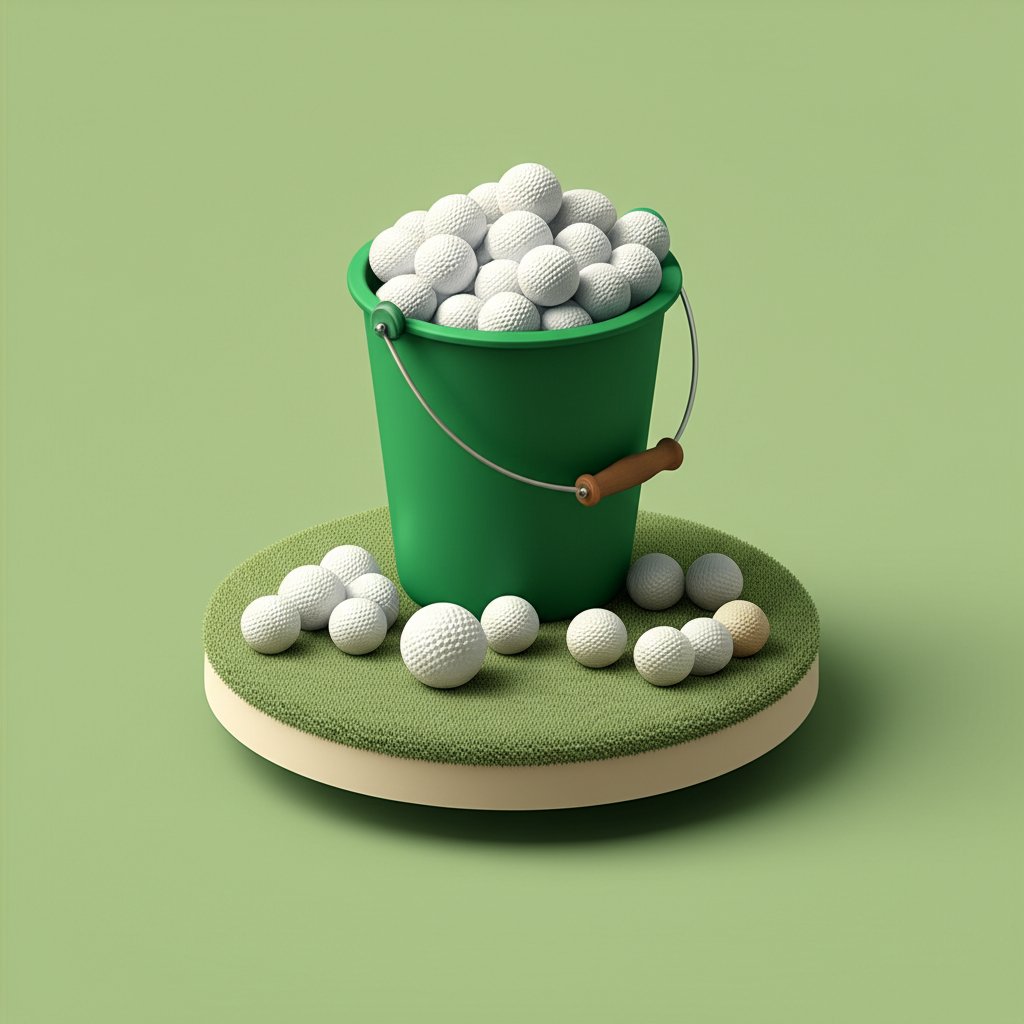
The familiar clatter of your last two golf balls rattling in your bag is a sound every golfer dreads, especially on the 7th hole. The knee-jerk reaction is to grab another expensive dozen at the pro shop. But the savviest players know a secret: the right bucket of used golf balls isn’t a compromise—it’s a strategic advantage that saves you a fortune without costing you performance.
This isn’t about fishing scuffed-up rocks from a water hazard. It’s about understanding a system of quality control that lets you play premium balls for a fraction of the price.
At a Glance: Your Takeaways
- Master the Grading System: Learn the crucial difference between Mint (5A), Near Mint (4A), and Good (3A) to match the ball to your needs.
- Choose Your Arsenal: Decide between a consistent, single-model bucket and a value-packed brand mix.
- Practice Smart, Play Smart: Understand which grade is best for the driving range versus a competitive round.
- Inspect Your Investment: Know what to look for when your bucket arrives to ensure you got what you paid for.
- Unlock Massive Savings: See how buying in bulk can save you up to 90% off the retail price of new golf balls, freeing up cash for more green fees.
The Smart Golfer’s Secret: Separating Performance from Price
Let’s be honest. The pain of watching a brand-new, $5 Titleist Pro V1 sail into the woods is real. It’s a mental blow that can linger on the next tee shot. Now, imagine losing a ball that looks, feels, and performs identically but only cost you about a dollar. You shrug it off and focus on your next swing.
This psychological freedom is one of the biggest, yet most underrated, benefits of switching to used golf balls. For the vast majority of amateur players, the performance difference between a new ball and a top-quality recycled one is practically zero. A Mint (5A) grade ball has likely been hit only a few times. It has no scuffs or blemishes affecting its flight—it just has a different history and a much smaller price tag.
The savings add up quickly. A bucket of 100 premium used balls might save you $200 or more compared to buying new. That’s enough to cover several rounds of golf, a new wedge, or a lesson to fix the slice that’s costing you all those balls in the first place.
Not All Used Balls Are Equal: Mastering the Grading Scale

The key to unlocking value is understanding the grading system. Reputable sellers hand-sort every ball into clear quality tiers. Think of it like buying a certified pre-owned car versus a random one from a classified ad. Knowing the grades turns buying a bucket of used golf balls from a gamble into a calculated, expert decision.
While you can find a complete overview to help you Score great deals on used golf balls, let’s break down the specific grades you’ll encounter here.
Mint (5A): The “Played-One-Hole” Experience
This is the highest quality you can get. A Mint 5A ball is in excellent condition, appearing and feeling almost indistinguishable from a new ball right out of the sleeve. They have been gently used, perhaps for only a hole or two, before being lost.
- Appearance: Clean, glossy finish with no scuffs, cuts, or significant blemishes.
- Markings: May include corporate logos or standard player pen markings (a dot or a line), which have zero effect on performance.
- Best For: Competitive rounds, serious golfers, and anyone who wants the confidence of a new ball without the sticker shock.
- Practical Snippet: A tournament player with a 6-handicap buys a bucket of 100 Mint 5A Titleist Pro V1x balls. She saves over 50% and plays with the exact same model she trusts, ensuring shot-to-shot consistency.
Near Mint (4A): The Everyday Workhorse
This grade represents the absolute sweet spot for value and performance for the majority of golfers. These balls are in very good condition and are perfect for your regular weekend round. They’ve been played for a few holes and show only minor signs of use.
- Appearance: Still has a good shine but may have small blemishes, slight discoloration, or minor cosmetic abrasions. Crucially, these flaws will not affect the ball’s integrity or performance.
- Markings: Like 5A, they can have logos and player markings.
- Best For: Daily play, mid-to-high handicappers, and anyone looking for the best possible balance of price and quality.
- Practical Snippet: A 15-handicap golfer who plays twice a month buys a bucket of 100 Near Mint 4A Callaway Chrome Softs. He enjoys a premium urethane-cover ball every round and no longer worries about losing a few on a challenging course.
Good (3A): The “Shag Bag” Specialist
These are the most affordable and are fantastic for certain situations. A 3A ball is perfectly playable but will have noticeable cosmetic flaws. They are the definition of a “no-worries” golf ball.
- Appearance: Will have scuffs, blemishes, and discoloration. Some balls might have “X-Out” or “Practice” stamps.
- Markings: Can have larger or more prominent player markings.
- Best For: Practice sessions, hitting on the range, chipping in the backyard, beginners, or playing on courses with extreme water hazards or tight fairways where ball loss is frequent.
- Practical Snippet: A new golfer buys a mixed bucket of 100 Good 3A balls. This gives him a massive supply to learn the game, allowing him to take aggressive lines and learn from mistakes without the financial penalty of losing new balls.
Curating Your Arsenal: Brand Mixes vs. Single-Model Buckets
Once you’ve decided on a grade, you have another choice: do you want a bucket full of one specific model, or a random mix of different brands?
The All-Rounder’s Choice: The Mixed Brand Bucket
A mixed bucket of used golf balls is the ultimate value play. You’ll typically get a variety of major brands like Titleist, Callaway, TaylorMade, and Bridgestone all in one bag.
- Pros: The most cost-effective option. It’s also a great way to experiment and discover a new ball you might love without committing to a full dozen.
- Cons: Inconsistency. You might pull a soft-feel Callaway out for one shot and a firm-feel Titleist for the next, which can be jarring if you’re sensitive to feel and spin.
The Specialist’s Pick: The Single-Model Bucket
If you have a go-to ball you love, this is the option for you. You can buy a bucket of 100 Titleist Pro V1s, TaylorMade TP5s, or Bridgestone Tour B RXs in your preferred grade.
- Pros: Unbeatable consistency. You know exactly how the ball will feel off the clubface, how it will spin around the greens, and how it will fly off the tee, every single time.
- Cons: It’s more expensive than a random mix, though still dramatically cheaper than buying the same balls new.
| Feature | Mixed Brand Bucket | Single-Model Bucket |
| :— | :— | :— |
| Best For | Casual players, beginners, practice | Serious players, brand-loyal golfers |
| Consistency| Low (varies ball-to-ball) | High (same feel every shot) |
| Cost | Lowest | Moderate (still a huge saving) |
| Discovery | High (try many different balls) | Low (you know what you’re getting) |
The Smart Buyer’s Checklist for Used Golf Balls

Buying a bucket of balls is easy, but a few simple steps ensure you get the best experience and value.
Step 1: Define Your Goal and Budget
Before you click “buy,” ask yourself what you need the balls for.
- Tournament Play? Stick to 5A of your preferred model.
- Weekend Fun? 4A is your best bet, either mixed or a specific model.
- Heavy Practice? A 3A or 4A mix is perfect.
Step 2: Vet Your Vendor
Stick with established sellers who have a strong reputation. Look for clear, detailed descriptions of their grading scale, just like the ones we’ve covered. Customer reviews are your best friend here—see what other golfers are saying about the quality and accuracy of the grading.
Step 3: Inspect Upon Arrival
When the box lands on your doorstep, don’t just stash it in the garage. Take five minutes to do a quick quality check. - Count the balls: Make sure you received the quantity you ordered.
- Spot-check the grade: Grab a handful of balls. Do they match the grade description? If you ordered 5A, they should look nearly perfect. If you ordered 4A, a few minor blemishes are expected.
- Check for duds: While rare from good suppliers, quickly scan for any balls that are cracked or have deep, unplayable gashes. Reputable companies will happily replace these.
Step 4: Sort and Organize Your Supply
This is a pro tip. Dump the bucket out and sort them. For a 4A bucket, you might find 20-30 balls that are so good they could pass for 5A. Put those in the “gamer” pocket of your bag. The rest can go in the main pocket for everyday play. This little bit of organization ensures you’re always using the best possible ball for the situation.
Frequently Asked Questions About Buying a Bucket of Used Golf Balls
Q: Are “recycled” and “refinished” golf balls the same thing?
This is a critical distinction. No, they are not. Recycled balls (which we’ve been discussing) are simply found, washed, and sorted by grade. Their original factory cover and dimple pattern are intact. Refinished balls have been stripped, repainted, and re-stamped. This process can alter the ball’s aerodynamics and performance, and they are generally considered inferior. Always look for “recycled” or “used.”
Q: Do corporate logos or player pen marks affect performance?
Not one bit. A logo is just a layer of paint, and a pen mark is ink. Neither will change how the ball flies, spins, or rolls. They are purely cosmetic and the primary reason these balls are available at such a great discount.
Q: Is there a real performance drop-off between a 5A and a 4A ball?
For a Tour pro with a finely tuned swing, maybe. For the average amateur golfer, the performance difference is almost impossible to notice. A minor cosmetic blemish or slight discoloration on a 4A ball will not impact its distance or spin in any meaningful way.
Q: Can I really find premium balls like the Pro V1 or TP5 in a used bucket?
Absolutely! This is the single biggest advantage of buying used. Golfers of all skill levels lose premium balls, and you get to reap the benefits. You can fill your bag with the best balls in golf for the price of a mid-range new ball.
Your Quick-Start Guide to the Perfect Bucket
Choosing the right bucket of used golf balls doesn’t have to be complicated. Just match the product to your game.
- If you’re a low-handicapper (0-9) playing a competitive round, your priority is consistency.
- Your Choice: A 5A Mint bucket of your specific, preferred ball model (e.g., Titleist Pro V1, TaylorMade TP5x).
- If you’re a mid-handicapper (10-20) playing your regular weekend game, you want the best blend of quality and value.
- Your Choice: A 4A Near Mint bucket. Choose your specific model if you’re loyal to one, or a premium brand mix (e.g., “Titleist/Callaway/TaylorMade Mix”) for great value.
- If you’re a high-handicapper (21+), a beginner, or just need balls for practice, your goal is to have a large supply without fear of loss.
- Your Choice: A 3A Good or 4A Near Mint mixed brand bucket. This gives you the lowest cost-per-ball and the freedom to swing away.
By investing a few minutes to understand this system, you’re not just buying cheap golf balls. You’re buying a smarter, more affordable way to enjoy the game. You get to play with better equipment, worry less on the course, and save your money for what really matters: playing more golf.

Whether testing new equipment or exploring the world’s best courses, I'm brings fresh, easy-to-understand content that makes golf accessible for everyone. Follow along and elevate your game with expert advice, every day.
- Nike Golf Balls For Sale Are Now Widely Available - May 18, 2026
- Does Nike Still Make Golf Balls? Unpacking Their Golf Equipment Exit - May 17, 2026
- Nike Golf Balls New Listings Draw Interest from Collectors - May 16, 2026