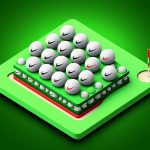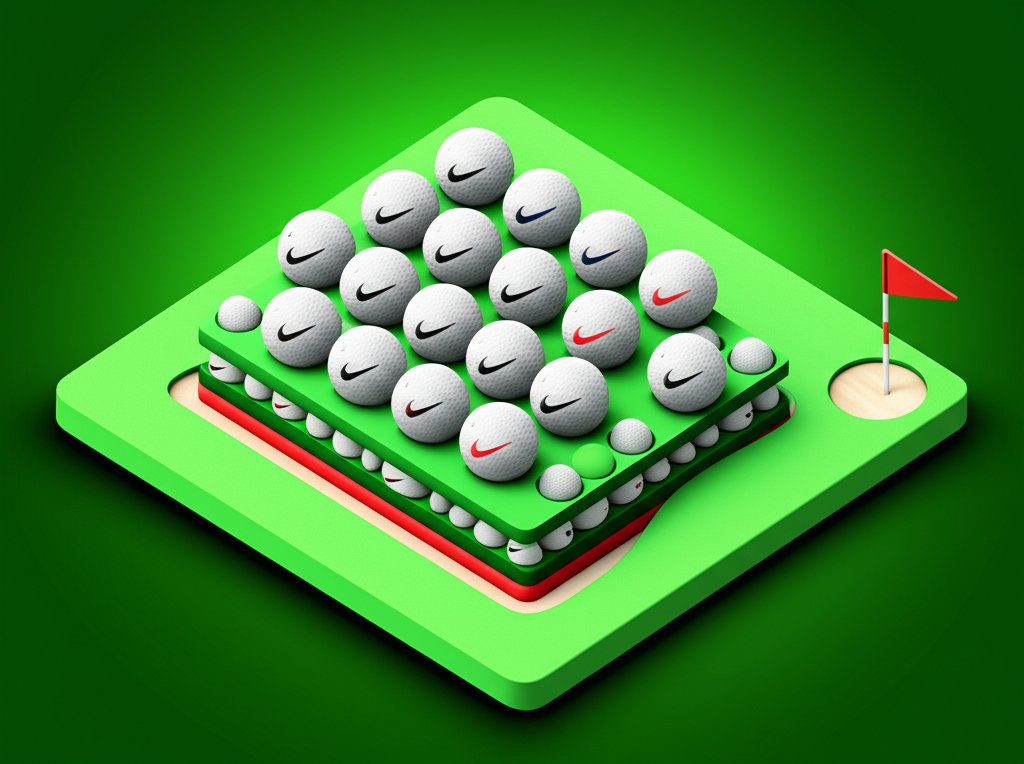
It’s a strange sight in the golf world: a feverish hunt for something that hasn’t been made in years. Search online marketplaces for nike golf balls new, and you’ll find a bustling bazaar of unopened sleeves and pristine dozens commanding surprising prices. For a brand that famously exited the golf equipment game back in 2016, the ghost of its golf ball division isn’t just lingering—it’s thriving, fueled by a potent mix of nostalgia, performance reverence, and the colossal legacy of Tiger Woods.
This isn’t just about finding old golf balls. It’s a treasure hunt for a specific moment in sports history. Each new-in-box sleeve of RZN Tour Platinums or a classic ONE Tour D is a time capsule, representing Nike’s ambitious, and ultimately abandoned, quest to dominate every corner of the golf industry. For collectors and players alike, these spheres are more than just urethane and rubber; they’re artifacts.
At a Glance: The Nike Golf Ball Phenomenon
New to the world of collectible golf gear? Here’s the essential brief on why these discontinued balls are making a comeback.
- Production Halted: Nike stopped producing all golf equipment—including balls, clubs, and bags—in August 2016 to focus exclusively on apparel and footwear.
- “New” Means “Old Stock”: When you see “new” Nike golf balls for sale, it refers to “new old stock” (NOS)—products that were manufactured before the 2016 shutdown but never sold or used.
- Scarcity Drives Value: With a finite supply, iconic models like the RZN Tour series and ONE Tour have become collector’s items. Their value is determined by model, condition, and packaging integrity.
- The Tiger Effect: Tiger Woods was the face of Nike Golf for two decades. The balls he played and helped develop, particularly the RZN line, carry a significant historical premium.
- Authentication is Crucial: The high demand has created a market for fakes and “refinished” balls. Knowing how to spot a genuine product is essential for any serious buyer.
The End of an Era: Why Are “New” Nike Balls So Rare?
To understand the current market, you have to go back to 2016. Nike, a titan of sports marketing and apparel, made a stunning announcement: it was getting out of the “hard goods” business. This meant no more drivers, no more irons, and, crucially, no more golf balls. The company decided to double down on what it did best—shoes and clothing—and leave the hyper-competitive equipment space to mainstays like Titleist, Callaway, and TaylorMade.
The decision sent ripples through the industry. Overnight, the entire supply chain for Nike golf balls vanished. Production lines stopped, R&D projects were shuttered, and the balls on pro shop shelves became the last of their kind.
This pivot is the central reason for the scarcity and subsequent collector interest. Unlike a vintage wine that is still produced each year, the 2015 Nike RZN Tour Black will never be made again. Every sleeve that gets opened and played is one less that exists in the world. This simple economic principle of finite supply meeting resurgent demand is why a product that once sold for $45 a dozen can now fetch two or three times that. The core question many golfers ask is if Nike golf balls still made today, and the definitive answer is no, which is precisely what makes them so valuable to collectors.
The Collector’s Checklist: Identifying Iconic Nike Golf Ball Models
Not all Nike balls are created equal in the eyes of a collector. While casual models like the Mojo or Crush have a certain nostalgic charm, the real value lies in the premium, Tour-level models that showcased Nike’s most advanced technology.
The RZN (Resin) Family: Nike’s Swan Song
The RZN line was Nike’s technological peak and its final major contribution to golf ball design. The innovation was its proprietary Resin core, which was lighter and faster than traditional rubber cores. This allowed engineers to move more weight to the perimeter of the ball, increasing the moment of inertia (MOI) for more stable flight, especially in windy conditions.
- RZN Tour Black & Platinum: These were the flagship balls. The Black was engineered for lower-spin, more penetrating flight, while the Platinum offered a softer feel and higher spin for more greenside control. Tiger Woods and Rory McIlroy played and provided feedback on these models, cementing their legacy. A mint-condition sleeve of either is a top-tier find.
- RZN Red & White: These were the distance-focused and feel-focused versions for amateur players, respectively. While not as valuable as the Tour models, they are still highly sought after for their unique RZN performance.
The ONE Tour & ONE Tour D: The Workhorse Legends
Before the RZN era, the ONE Tour was Nike’s answer to the Titleist Pro V1. It was a multi-layer, urethane-covered ball beloved for its consistent performance and excellent feel.
- Nike ONE Tour: This ball was known for its exceptional greenside spin and soft feel, making it a favorite among players who prized control and workability.
- Nike ONE Tour D: The “D” stands for distance. This model was slightly firmer and offered lower spin off the driver for players seeking maximum yardage without sacrificing too much feel around the greens.
The 20XI: The Radical Innovator
The 20XI, launched around 2011, was the direct predecessor to the RZN line and the first to feature a Resin core. It was a bold attempt to challenge convention, and while it had its devoted followers, it paved the way for the more refined RZN models that came later. Finding a new dozen of the 20XI-X or 20XI-S is a sign of a serious collection.
| Model Series | Key Technology | Primary Player Association | Collector Interest |
|---|---|---|---|
| RZN Tour | Speedlock RZN Core, Urethane Cover | Tiger Woods, Rory McIlroy | Very High |
| ONE Tour | Power Transfer Layer, Urethane Cover | Tiger Woods (earlier) | High |
| 20XI | First-Generation RZN Core | Early adopters, Tour pros | Medium-High |
| Mojo/Crush/Juice | 2-Piece Surlyn Construction | Recreational Players | Low (Nostalgia) |
Hunting for Treasure: Where to Find Authentic Nike Golf Balls
Now that you know what to look for, where do you actually find these relics? The hunt is part of the fun, but knowing where to start saves you time and frustration.
Primary Markets: Online and In-Person
The most reliable source is the vast world of online marketplaces. Platforms like eBay are the epicenter of the Nike golf ball trade, with dozens of listings appearing daily. This is the best place to Shop Nike Golf Balls from a wide variety of sellers. You can find everything from single, mint-condition balls to sealed cases of a dozen.
Beyond the big sites, niche communities can be gold mines. Check out golf-specific forums (like GolfWRX) and Facebook collector groups. In these communities, you’re often dealing with passionate hobbyists who know the product history and take pride in their collections.
Don’t discount the real world, either. The occasional “barn find” still happens. An old pro shop clearing out a back room, a garage sale, or an estate sale of a passionate golfer could hold a dusty but pristine stack of Nike ONE Tours.
New Old Stock vs. High-Grade Used
For the purist collector, only new-in-box will do. But for the player who misses the feel of a RZN Platinum, high-grade used balls are a fantastic option. Many online retailers specialize in retrieving and sorting used golf balls, grading them from mint (often “5A” or “AAAAA”) to practice quality. If you want to experience the performance without the collector’s price tag, you can often Shop Used Nike Golf Balls and get a dozen for a fraction of the cost of a sealed sleeve.
Buyer’s Guide: How to Evaluate and Value Your Find
Finding a promising listing is one thing; making a smart purchase is another. The market for discontinued items is unregulated, so the responsibility falls on you to be a savvy buyer.
Condition Is Everything
The value of a collectible Nike golf ball is tied directly to its condition. Here’s a simple hierarchy:
- New in Box (NIB)/Sealed Sleeve: This is the gold standard. The packaging is intact, the balls have never been touched by a club. This commands the highest price.
- New, Loose: These are balls that are unhit but have been removed from their original packaging. They are valuable for players but less so for collectors who prize original sealing.
- Mint/Near-Mint Used: A ball that was likely used for a hole or two. It may have a small ink mark but no scuffs or scratches. These are perfect for players who want a like-new experience.
How to Spot Fakes and Refinished Balls
As prices have risen, so have the instances of counterfeits. Be vigilant and look for these red flags:
- Logo and Font Issues: On a fake ball, the Nike “Swoosh” or the model name (e.g., “RZN”) might be slightly blurry, off-center, or use a font that doesn’t quite match the original. Compare listings to known genuine examples.
- Packaging Flaws: Counterfeit boxes often use cheaper cardboard, have blurry printing, or feature incorrect logos and text.
- Suspiciously Low Prices: If a seller is offering a dozen NIB RZN Tour Platinums for $25, be extremely cautious. If it looks too good to be true, it almost certainly is.
- “Refinished” or “Refurbished” Disclosure: These are used balls that have been stripped and repainted to look new. They are not collector’s items and will not perform like the original ball. Sellers are supposed to disclose this, but not all do.
Pro Tip: When in doubt, ask the seller for high-resolution photos of the ball and its packaging from multiple angles. A reputable seller with a genuine product will have no problem providing them.
Beyond the Collection: The Rise of Custom Nike Balls
An interesting offshoot of this nostalgia is the demand for personalized Nike balls. Many golfers want to commemorate a tournament, corporate event, or golf trip with a custom logo on a ball they once loved. Since Nike is no longer in the business, this has created a cottage industry.
The process typically involves sourcing a batch of new old stock or mint-condition used Nike balls and then sending them to a third-party printing company that specializes in custom logos. It’s a way to merge the classic performance of a beloved ball with a personal touch. If you’re looking to create something unique for a special occasion, you can work with specialized services to Design your Nike golf balls using authentic, unhit stock.
Frequently Asked Questions About Nike Golf Balls
Even seasoned golfers have questions about this unique corner of the market. Here are crisp answers to some of the most common ones.
Why did Nike stop making golf balls?
In 2016, Nike announced a strategic pivot to exit the golf equipment business (balls, clubs, bags). The company chose to focus on its core strengths and more profitable sectors: golf footwear and apparel, where it continues to be a dominant force.
Are old Nike golf balls still good to play with?
Absolutely. A new old stock Nike ball that has been stored in a climate-controlled environment will perform exceptionally well. However, golf balls can degrade over time. The urethane cover can yellow and lose some of its elasticity, and the core can lose a marginal amount of velocity. For most amateur players, a 10-year-old NIB ball will still feel and fly great.
Which Nike golf ball did Tiger Woods use?
Tiger’s ball evolved with Nike’s technology. He started with the Tour Accuracy, famously used the Nike ONE Platinum for many of his major victories in the 2000s, and was instrumental in the development and playtesting of the RZN Tour Black/Platinum series before Nike exited the equipment business.
How much is a sleeve of Nike RZN Tour balls worth?
Prices fluctuate based on demand and condition. As of late, a single sealed sleeve (3 balls) of the RZN Tour Black or Platinum model typically sells for between $40 and $80 on sites like eBay. A full, sealed dozen can easily exceed $150.
To Play or to Display? Your Next Move
The hunt for Nike golf balls ultimately leads to a fork in the road. What is your goal? Are you a collector building a visual library of golf history, or are you a player chasing the ghost of a feeling you once had on the course?
For the Player: Your mission is performance and nostalgia. Focus on finding near-mint used balls or new old stock of your favorite model. Don’t overpay for perfect packaging you’re just going to tear open on the first tee. Enjoy the unique flight and feel, and appreciate the experience of playing a piece of history.
For the Collector: Your mission is preservation and investment. Prioritize new-in-box, sealed products. Do your homework, verify authenticity, and be patient for the right listing to appear. Your collection isn’t just a set of golf balls; it’s a tangible archive of an important chapter in the modern game.
Whichever path you choose, the enduring appeal of Nike’s golf balls serves as a powerful reminder: even when a brand moves on, a truly great product never really disappears. It just becomes a legend.

Whether testing new equipment or exploring the world’s best courses, I'm brings fresh, easy-to-understand content that makes golf accessible for everyone. Follow along and elevate your game with expert advice, every day.
- Nike Golf Balls New Listings Draw Interest from Collectors - May 16, 2026
- Golf Ball Gift Sets Make Thoughtful Presents for Avid Golfers - May 15, 2026
- Custom Golf Ball Sets Offer the Perfect Personalized Gift - May 14, 2026