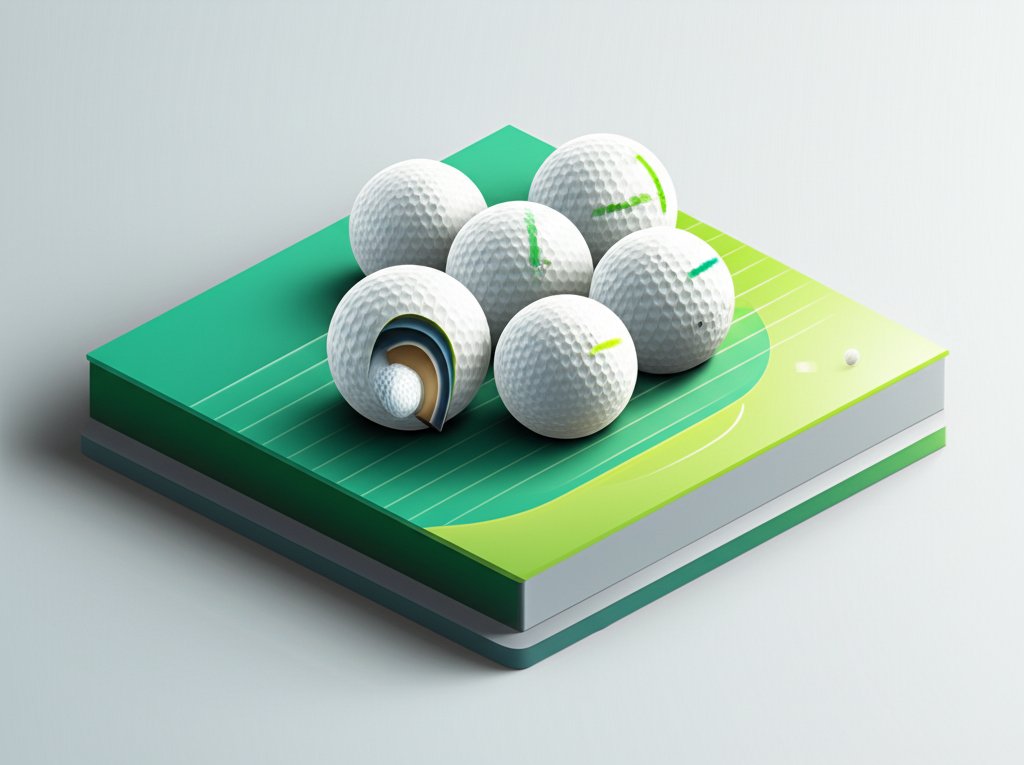
You’re standing on the first tee, driver in hand, ready to start your round. You reach into your bag, pull out a random ball you found last week, and tee it up. But have you ever stopped to wonder if that little white sphere is helping or hurting your game? With so many types of golf balls on the market, choosing the right one can feel as complex as reading a slick, downhill putt.
The truth is, the ball you play is a critical piece of equipment. It’s the only thing you use on every single shot. Playing a ball designed for a tour pro when you have a 20-handicap is like trying to drive a Formula 1 car to the grocery store—you’re simply not equipped to get the most out of it.
This guide will demystify the world of golf balls. We’ll break down the jargon, explain the technology in plain English, and give you a simple framework to find the perfect ball that complements your swing and shaves strokes off your score.
At a Glance: Finding Your Perfect Match
Short on time? Here’s the bottom line on choosing the right golf ball for you.
- Your Handicap is Your Guide: Golf balls are designed for specific skill levels. Tour Performance balls are for elite players, Tour Value for low-to-mid handicappers, and Distance balls (Straight or Soft) are for mid-to-high handicappers.
- Construction Matters: The number of layers (or “pieces”) in a ball dictates its performance. Two-piece balls maximize distance and forgiveness for beginners, while multi-layer (3, 4, or 5-piece) balls offer more spin and control for experienced players.
- Cover Material is Key: A firm Surlyn cover promotes distance and durability with less spin (good for fighting a slice). A soft Urethane cover provides superior spin and control around the greens (the choice of pros).
- Match Compression to Swing Speed: If you have a slower swing, a low-compression ball will feel softer and give you more distance. If you have a fast swing, a high-compression ball will provide maximum energy transfer and control.
- Don’t Guess, Test: The best way to find your ideal ball is to buy a sleeve of a few different models in your category and see how they perform on the course, especially from 100 yards and in.
Why Your Golf Ball Is More Than Just a Little White Sphere
For decades, golf balls were relatively simple. But modern golf balls are marvels of multi-material engineering, each designed with a specific performance goal and player in mind. Think of it less like a rock and more like a high-tech tool. The core, mantle layers, and cover all work in concert to influence distance, trajectory, spin, and feel.
Choosing the wrong ball can actively work against you. A high-handicapper using a high-spin tour ball will likely see their slice get worse, as the extra side-spin exaggerates their miss. Conversely, a scratch player using a hard, low-spin distance ball will feel like they’re hitting a rock around the greens, unable to get the spin they need to stop the ball close to the pin.
Understanding the fundamental Different Golf Ball Types is the first step toward optimizing your equipment for your game. Let’s break down the main categories you’ll see on the shelf.
The Four Main Categories of Golf Balls: A Quick Guide
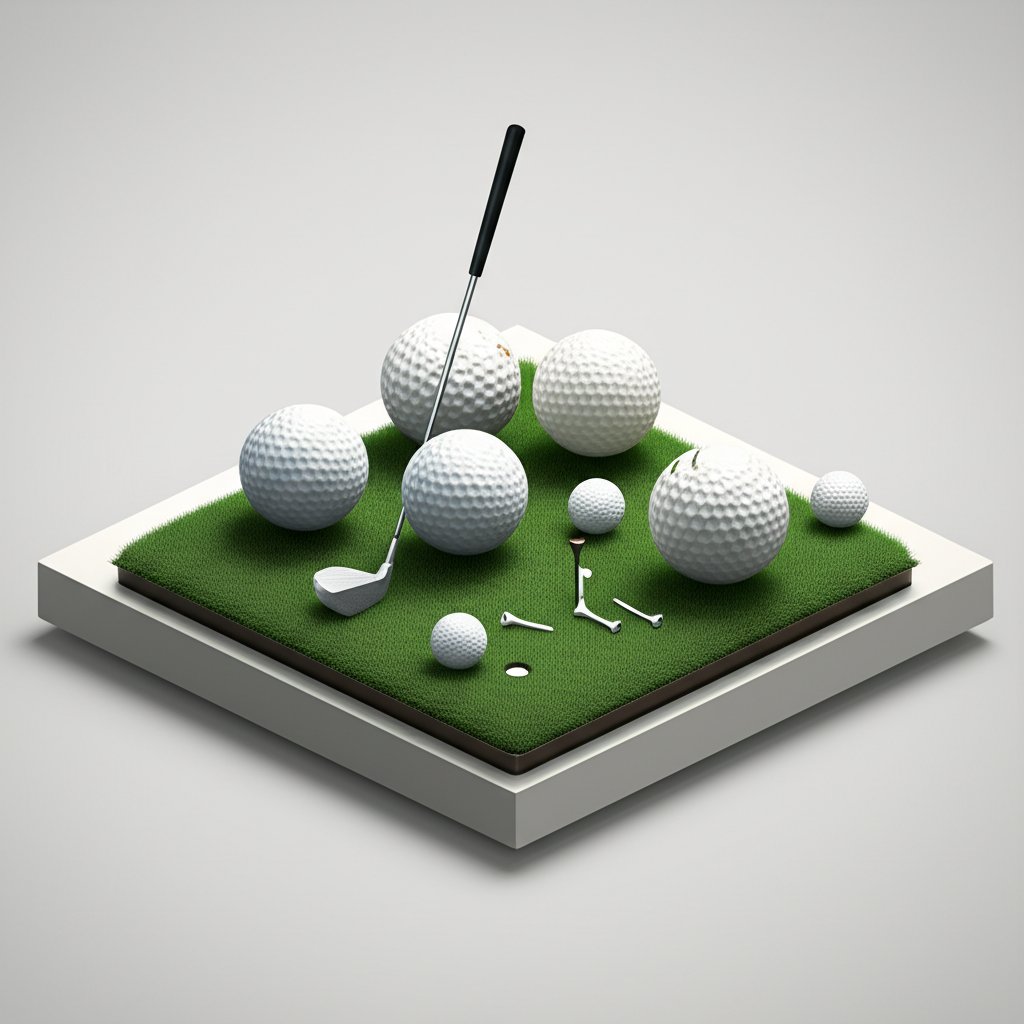
Nearly every golf ball on the market fits into one of four categories. Finding your category is the easiest way to narrow down your options from hundreds to just a handful.
Tour Performance
These are the top-of-the-line models you see the pros play on TV. Think Titleist Pro V1, TaylorMade TP5, and Callaway Chrome Soft.
- Who they’re for: Scratch to low-handicap golfers (roughly 0-10 handicap) with fast swing speeds (105+ mph with a driver).
- What they do: These multi-layer (3 to 5-piece) balls with soft urethane covers are designed for total performance. They offer “spin separation”—low spin off the driver for maximum distance, and high spin off wedges for incredible stopping power on the greens.
- The tradeoff: They are the most expensive balls on the market and are less forgiving on mishits. The high spin that helps a pro stick a green can make a weekend golfer’s slice much worse.
Tour Value
This category offers many of the performance benefits of a tour ball but at a more accessible price point. Models like the Srixon Q-Star Tour or the Titleist Tour Soft fit here.
- Who they’re for: Low to mid-handicap players (roughly 8-18 handicap) who want more spin and feel than a distance ball but don’t need the elite performance (or price tag) of a premium model.
- What they do: Typically 3-piece balls with a urethane or soft ionomer cover, they provide a great blend of distance off the tee and feel around the greens. They are often slightly lower in compression to suit a wider range of swing speeds.
- The sweet spot: This is arguably the best category for the aspiring amateur who wants to improve their short game control without breaking the bank.
Straight Distance
If your main goal is to hit the ball farther and straighter, this is your category. These balls are built with one primary objective: to minimize spin and maximize yards.
- Who they’re for: Mid to high-handicap golfers (15+ handicap) and beginners who struggle with a slice or hook.
- What they do: These are almost always 2-piece balls with a firm Surlyn (or ionomer) cover. This construction reduces side-spin, which helps straighten out crooked shots. They feel firm off the clubface and are exceptionally durable. Popular examples include the Titleist Velocity and Pinnacle Rush.
- The tradeoff: What you gain in distance and forgiveness, you lose in feel and greenside control. These balls won’t “check up” on wedge shots like a urethane ball will.
Soft Distance
This category has exploded in popularity, offering a better feel than traditional distance balls while still prioritizing distance and forgiveness for average swings.
- Who they’re for: Mid to high-handicap players and seniors with slower swing speeds who want more distance but hate the “hard” feel of a traditional distance ball.
- What they do: These are low-compression 2-piece balls, like the popular Callaway Supersoft or Srixon Soft Feel. The super low compression makes the ball feel buttery soft at impact and helps players with slower swings compress the ball effectively to generate more speed and distance.
- The feel-good choice: If you want a ball that feels great, flies high, and is easy on the wallet, this is the perfect place to start.
Deconstructing the Golf Ball: What’s Inside Matters
To truly appreciate the differences between ball types, you have to look under the hood. A ball’s inner construction and outer material are the building blocks of its performance.
The Layers: From One-Piece to Five-Piece Marvels
The number of “pieces” or layers in a ball is the most fundamental aspect of its design. It’s the key to Understanding Golf Ball Differences and why some balls cost $50 a dozen while others cost $20.
- One-Piece: The simplest construction. It’s a solid sphere of Surlyn with dimples molded in. You won’t find these on the course; they’re almost exclusively used for driving ranges and mini-golf due to their extreme durability and low performance.
- Two-Piece: The most common ball for recreational golfers. It consists of a large, solid rubber core and a firm outer cover (usually Surlyn). This design is a distance machine—it minimizes spin and maximizes energy transfer, making it long, straight, and durable.
- Three-Piece: Here, we add a soft mantle layer between the core and the cover. This extra layer allows designers to fine-tune performance. It helps generate more spin on shorter shots with wedges while keeping spin low with the driver, offering a great balance of distance and control.
- Four-Piece & Five-Piece: The pinnacle of golf ball tech. These balls have a core, a cover, and two or three mantle layers in between. Each layer is engineered to react differently depending on the impact speed. On a high-speed driver shot, all layers activate for low-spin distance. On a slow-speed wedge shot, only the outer layers engage, creating massive spin for control.
The Cover Story: Urethane vs. Surlyn
The cover is the ball’s first point of contact with the clubface, and its material has a huge impact on spin and feel.
Urethane
This is a soft, premium material used on Tour Performance and Tour Value balls. Its softness allows the grooves of your wedges to “grab” the ball at impact, generating significantly more backspin. This is what allows skilled players to hit high-arcing shots that land softly and stop quickly on the green. The downside? Urethane is less durable and can scuff or get cut more easily.
Surlyn
Developed by DuPont, Surlyn is an ionomer resin that is much firmer and more durable than urethane. Its firmness reduces spin, which helps maximize distance and minimize the side-spin that causes hooks and slices. It’s the go-to material for Straight Distance and Soft Distance balls because it’s nearly indestructible and promotes straighter flight.
The Language of Performance: Decoding Compression and Spin
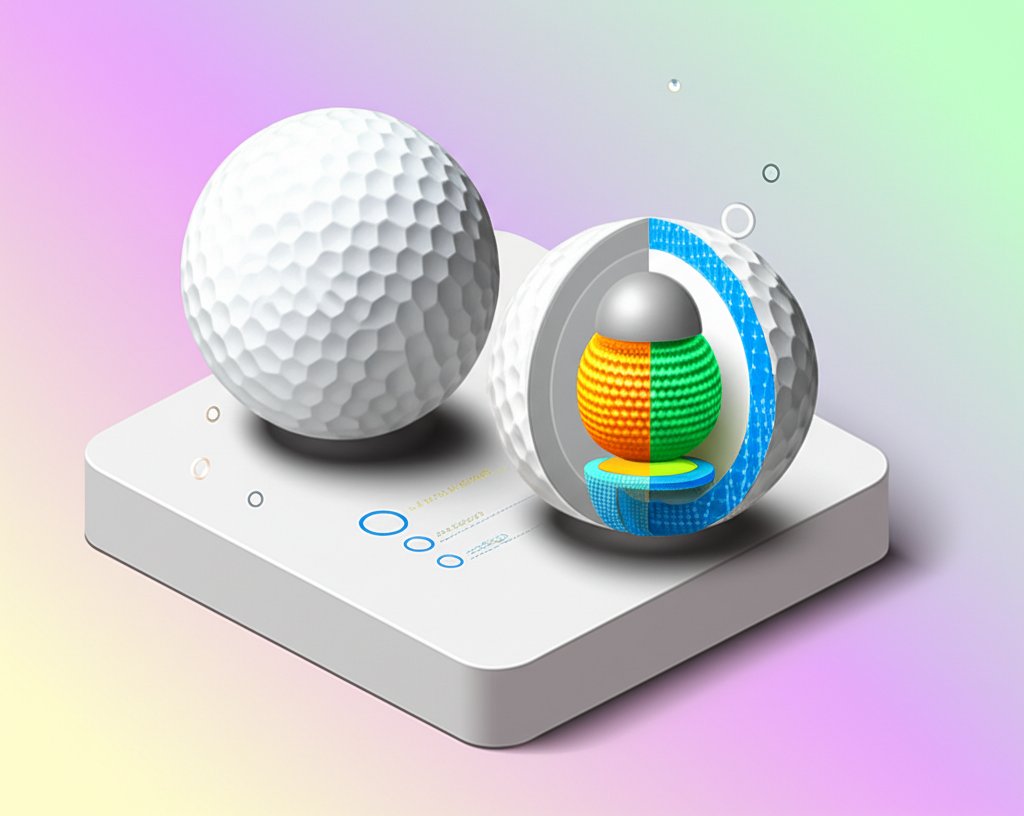
Now that you know how a ball is built, let’s talk about the two most important performance metrics: compression and spin.
Compression Rating: Matching the Ball to Your Swing Speed
Compression is a measure of how much a ball deforms against the clubface at impact, rated on a scale from about 30 to 100. Think of it like squeezing a stress ball—some are squishier than others.
- Low-Compression (30-70): These balls feel very soft. They are designed for players with slow to moderate swing speeds (under 90 mph with a driver). A slower swing doesn’t generate enough force to fully “activate” a firm, high-compression ball. The soft core of a low-compression ball deforms more easily, creating a spring-like effect that generates more ball speed and distance for these players.
- High-Compression (90+): These balls feel firm and are designed for players with very fast swing speeds (105+ mph). A powerful swing can fully compress this firmer core, maximizing energy transfer for incredible distance and control. Using a high-compression ball with a slow swing is inefficient; you’re not squeezing all the potential distance out of it.
Spin Rate: The Difference Between Sticking the Green and Rolling Off
Spin is what makes the ball fly, but the type of spin determines the shot’s outcome. Backspin creates lift and helps the ball stop, while side-spin is the killer that creates slices and hooks. A ball’s design heavily influences its natural spin profile. When you want to Explore golf ball characteristics, spin is one of the most important to consider.
- Low-Spin Balls: These are your distance-oriented, 2-piece balls. By design, they reduce both backspin and side-spin. Less side-spin means your slice or hook will be less severe. Less backspin means the ball will fly on a more penetrating trajectory and roll out more upon landing, giving you more total distance.
- High-Spin Balls: These are your multi-layer, urethane-covered tour balls. They are engineered to be low-spinning off the driver but high-spinning with irons and wedges. That high spin is what lets you hit a 9-iron that flies high, lands softly, and stops within a few feet of its pitch mark.
Common Questions Answered (The Nitty-Gritty)
Let’s clear up a few more details you might be wondering about.
What do the numbers on a golf ball mean?
Today, the single-digit number (usually 1-4) is almost exclusively for identification. If you and your playing partner are both using a Titleist Pro V1, one can play the “1” and the other can play the “3” to tell them apart. Historically, two-digit numbers indicated compression (e.g., a “90” ball), but this is rarely used on modern packaging.
Why do golf balls have dimples?
A smooth golf ball would fly about half as far as a dimpled one. The dimples—typically between 300 and 500 of them—are an aerodynamic necessity. They create a thin layer of turbulent air around the ball’s surface, which reduces drag and creates lift. This allows the ball to stay in the air longer and travel a much greater distance.
Does a more expensive ball really make a difference?
Absolutely, but only if you have the skill to leverage its features. The biggest difference between a $50/dozen tour ball and a $25/dozen distance ball is greenside spin. If you can’t consistently strike the ball well enough to notice the difference in spin with your wedges, you are likely better off saving your money and playing a more forgiving model.
How do I know when to replace my golf ball?
A ball should be taken out of play if it has any significant scuffs, cuts, or scratches. Even a small scuff on the cover can disrupt the aerodynamics and cause the ball to fly erratically. For most amateur golfers, you’re more likely to lose a ball before you wear it out. A single ball can easily last several rounds if you keep it out of the woods and water.
How to Choose the Right Golf Ball for Your Game (A Simple Framework)
Feeling overwhelmed? Don’t be. Use this simple, four-step process to find the perfect ball for you.
Step 1: Honestly Assess Your Skill Level & Swing Speed
This is the most important step. Don’t let your ego get in the way.
- High-Handicap (18+): Your priority is forgiveness and distance. Look at Straight Distance or Soft Distance balls.
- Mid-Handicap (10-18): You’re starting to develop more consistency. You’re a great candidate for Tour Value or Soft Distance balls.
- Low-Handicap (0-9): You have a consistent, powerful swing and need control. Start with Tour Performance or Tour Value models.
If you don’t know your swing speed, you can get it measured at a local golf shop or use a simple guideline: if you hit your driver under 220 yards, you likely have a slower swing; if you hit it over 250, you have a faster swing.
Step 2: Identify Your Biggest On-Course Problem
What is the one thing you want to fix most?
- “I have a wicked slice.” You need a low-spin Straight Distance ball. The firm Surlyn cover will help mitigate side-spin.
- “I need more distance.” If you have a slower swing, a low-compression Soft Distance ball will help you maximize speed. If you have a fast swing, make sure you’re using a ball firm enough to handle it.
- “My approach shots won’t hold the green.” This is a cry for more spin. It’s time to upgrade to a Tour Value or Tour Performance ball with a urethane cover.
Step 3: Consider Your Budget
Golf is expensive enough. Be realistic about what you want to spend.
- Value ($20-$30/dozen): Excellent 2-piece distance and soft-feel balls live here.
- Mid-Range ($30-$40/dozen): This is the sweet spot for 3-piece Tour Value models that offer a great blend of performance.
- Premium ($45+/dozen): This is the domain of multi-layer Tour Performance balls. If you’re not a low-handicapper, you’re likely paying for technology you can’t use.
Step 4: Test, Don’t Guess
The final step is to take your research to the course. Buy one sleeve (3 balls) of two or three different models that fit your profile. Play a few holes with each, paying close attention to how they perform with every club in your bag.
Start your evaluation from the green and work backward. How does it feel off the putter? How does it react on chip shots? How does it spin on a full wedge shot? Finally, how does it feel and fly off the driver? The ball that gives you the most confidence and best performance from 100 yards and in is very likely the winner.

Whether testing new equipment or exploring the world’s best courses, I'm brings fresh, easy-to-understand content that makes golf accessible for everyone. Follow along and elevate your game with expert advice, every day.
- Types of Golf Balls that Fit Your Game - May 21, 2026
- Design Custom Nike Golf Balls for Unforgettable Event Gifts - May 20, 2026
- Used Nike Golf Balls Offer Premium Performance for Less - May 19, 2026