Of course. Here is the comprehensive pillar article on colored golf balls, written in the voice of a seasoned golf journalist.
You know the feeling. You pure a drive right down the middle, a perfect baby draw that lands exactly where you planned. You stride confidently down the fairway, get to the spot, and… nothing. The pristine white ball has vanished into the dappled sunlight, the thick rough, or against a bank of late-afternoon clouds. It’s a moment of pure golfing frustration that can derail a great hole.
This is precisely where colored golf balls—sometimes spelled coloured golf balls by our friends across the pond—are changing the game for amateurs and pros alike. Once dismissed as a novelty for the driving range, they are now a serious tool for better scores and a more enjoyable round. They offer a simple, brilliant solution to golf’s oldest treasure hunt.
At a Glance: Why Make the Switch to Color?
For those short on time, here’s the quick pitch on why you should consider adding a splash of color to your golf bag:
- Drastically Improved Visibility: Bright colors like yellow, orange, and pink stand out against the green of the fairway, the blue of the sky, and the brown of autumn leaves, making your ball easier to track in flight and find on the ground.
- No Performance Sacrifice: Modern colored golf balls from top brands like Titleist, Callaway, Srixon, and Bridgestone use the exact same core technology, cover materials, and dimple patterns as their white counterparts. You lose nothing in distance, spin, or feel.
- Faster Play and Less Frustration: Spending less time searching for your ball means a better pace of play for everyone and fewer penalty strokes from lost balls.
- Easy Identification: In a foursome where everyone else is playing a white Pro V1, your matte green ball is instantly identifiable, eliminating confusion and potential penalties.
- A Touch of Personal Style: Golf is a game of personality. Your ball can be another way to express yours.
More Than Just a Pretty Face: The Real-World Benefits
Let’s move past the idea that color is just for show. The functional advantages are tangible and can directly impact your performance and enjoyment on the course.
See Your Shot, Find Your Ball, Save Your Sanity
The number one reason golfers switch is visibility. Human eyes are naturally better at picking up certain high-contrast colors against a green or blue background.
- Against the Sky: A white ball can disappear completely into an overcast or hazy white sky. A vibrant yellow, orange, or pink ball, however, remains a distinct dot, allowing you to follow its entire flight path.
- On the Ground: In the rough, a flash of neon yellow is far easier to spot than a white ball nestled deep in the grass. The same goes for fall golf, where a white ball is perfectly camouflaged among fallen leaves.
- In Low Light: During those coveted twilight rounds, bright, fluorescent colors seem to glow, extending your playing time as the sun goes down.
This isn’t just about convenience. When you can track your ball’s flight, you get instant feedback. You see the draw, the fade, or the ballooning trajectory caused by too much spin. This information is crucial for making adjustments on your next swing.
Stand Out in a Crowd
“Is that a Titleist 2?”
“No, I’m a Titleist 4.”
“Wait, I thought you were playing a Callaway…”
This conversation is all too common on the fairway. When you play a unique colored ball, there’s never any doubt which one is yours. This simple advantage speeds up play and prevents the awkwardness (and two-stroke penalty) of accidentally playing the wrong ball.
Performance Isn’t Sacrificed for Pigment
A common myth is that colored golf balls are inferior “range balls” with a coat of paint. That might have been true decades ago, but today, it’s completely false.
How Top Brands Engineer Colored Balls
Think of your favorite premium golf ball—the Titleist Pro V1, the Callaway Chrome Soft, the Srixon Z-Star. They are all available in color, and the technology is identical to the white version.
The color is not a simple layer of paint sprayed on at the end. It’s integrated into the urethane or ionomer cover material itself. This ensures the pigment doesn’t affect the ball’s aerodynamic properties. The sophisticated dimple patterns designed to reduce drag and optimize lift perform exactly the same whether the cover is white, yellow, or hot pink.
The core, mantle layers, and compression ratings are all identical. A yellow Pro V1 is a Pro V1. A red Chrome Soft is a Chrome Soft. You are making a choice about visibility, not sacrificing an ounce of performance.
Matte vs. Gloss: A Finish for Every Golfer
The innovation hasn’t stopped at color. The finish of the ball is now a key consideration.
- Gloss Finish: This is the traditional, shiny finish you see on most golf balls. It looks clean and classic. Some players feel it gives them a better sense of compression at impact.
- Matte Finish: A newer trend, the matte finish offers a flat, non-reflective surface. The primary benefit is a complete reduction in glare on a sunny day. Many golfers find the soft, frosted look aesthetically pleasing and believe it helps them focus better at address.
The choice is purely preferential. Matte finishes don’t “grab” the clubface more or spin differently due to their texture. Test both and see which one you prefer looking down at.
What’s the Best Color for Your Game?
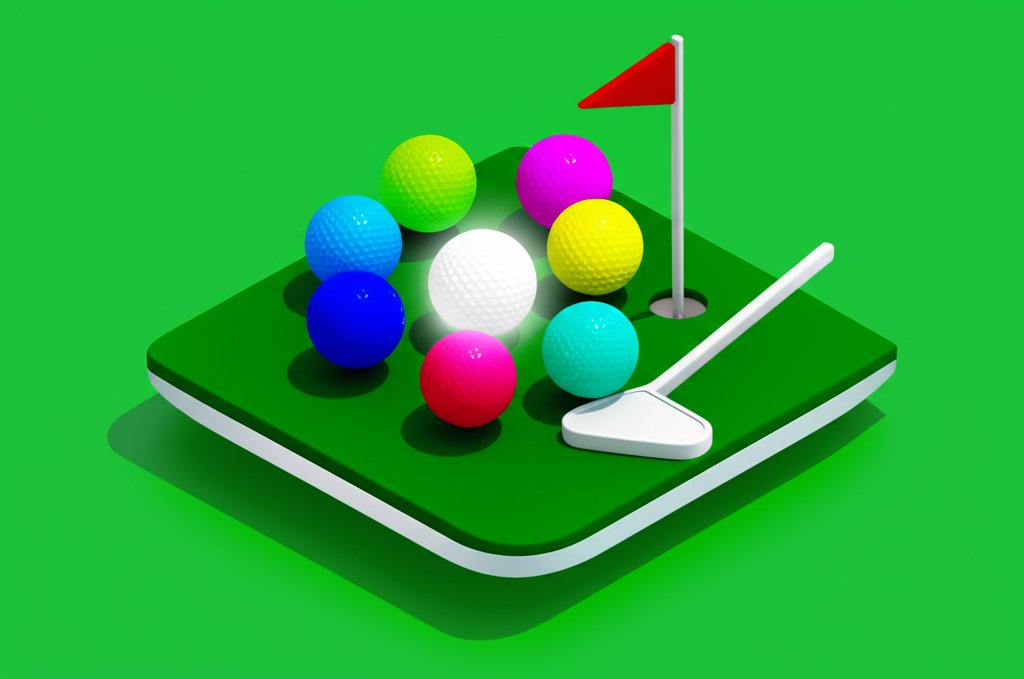
Okay, you’re sold on the concept. But with a whole rainbow of options, which color should you choose? The answer depends on your eyesight, the typical conditions you play in, and personal preference.
The Classics: Yellow and Orange
Optic yellow is the most popular non-white color for a reason. It sits at a peak wavelength for human eye sensitivity, making it pop against the green of the grass and the blue of the sky. It is, for most people, the most versatile and consistently visible option.
Orange is another excellent all-around choice. It provides fantastic contrast, especially on bright, sunny days and during autumn golf when it stands out against the brown and red leaves.
The Bold Choices: Pink, Red, and Green
- Pink: Fluorescent or “hot” pink is surprisingly visible for many golfers. It offers great contrast against every natural background and is very difficult to lose track of in the air.
- Red: Red can be a fantastic choice for tracking against a clear blue sky. However, it can sometimes be harder to spot on a green fairway for some people, especially those with certain types of color blindness.
- Green: It seems counterintuitive to use a green ball on a green course, but a bright, neon, or lime green is a very different shade from grass. Many players find it extremely easy to see, particularly on dormant, brownish winter fairways.
Your best bet is to experiment. What works for your playing partner might not work for you. For a deeper analysis of how different shades perform in various lighting conditions, our Guide to bright golf balls offers a detailed comparison.
Beyond Solid Colors: Patterns and Alignment Aids
The visual technology doesn’t stop with a single color. Many brands now incorporate patterns to enhance visibility and alignment.
- Callaway’s Triple Track: Using principles of Vernier Hyper Acuity, these three distinct lines help you align your putt with laser-like focus.
- Titleist’s TruFeel: This model features a bold, red alignment sidestamp to help you line up on the tee and the green.
- Two-Tone Balls: Models like the Srixon Q-Star Tour Divide or Volvik’s VIMAX SOFT feature a 50/50 color scheme. This design makes it incredibly easy to see the ball’s spin on chips and putts. In the air, the rotation creates a “flicker” effect that can make the ball easier to track.
Answering Your Burning Questions About Colored Golf Balls
Let’s clear up some common questions and misconceptions.
Q: Are colored golf balls legal in tournaments?
A: Yes, for the most part. The USGA and R&A rules only state that a ball must be on the Conforming Golf Ball List. All major manufacturers submit their colored models to be on this list. The PGA Tour and LPGA Tour have no rules against specific colors. However, it’s always wise to check the local rules for any specific club championship or competitive event, as some may (rarely) have their own stipulations.
Q: Do colored golf balls perform worse than white balls?
A: This is the biggest myth, and it’s definitively false. As covered earlier, a colored version of a premium ball from a reputable brand is identical in construction, materials, and performance to its white counterpart. The only difference is the pigment in the outer cover.
Q: Does the color fade or scuff off easily?
A: Not on quality golf balls. The color is integrated into the urethane or ionomer cover, not painted on. While any golf ball will show scuffs from a wedge shot out of a sandy bunker or a collision with a cart path, the color is just as durable as the white finish.
Q: What’s the single best color for visibility?
A: There isn’t one. It’s subjective. While optic yellow is the most popular for its all-around performance, your individual eyesight and the specific light conditions of the day play a huge role. The “best” color is the one you can see the best.
How to Find the Right Colored Ball for You
Ready to make the switch? Here’s a simple process to find your perfect match.
1. Start with Your Current Ball
If you already have a go-to golf ball, see if it comes in a colored version. If you love the feel and performance of a Titleist Tour Soft, for example, simply buy a sleeve of the yellow version. This is the easiest way to transition, as you’re only changing one variable: visibility.
2. Test, Don’t Guess
Don’t commit to a dozen just yet. Buy a sleeve of two or three different colors you’re curious about. Take them to the practice green to see how they look at address and how well you can see the roll. Then, take them on the course. Hit shots in the open, in the shade, and against different skies. One color will likely stand out as the clear winner for your eyes.
3. Consider a Ball with a Cause
Some manufacturers release special editions of colored golf balls that support charitable initiatives. You might find pink balls that donate a portion of proceeds to breast cancer research or balls with unique logos supporting environmental conservation. It’s a small way to make your purchase have a positive impact beyond your own game.
Your Next Round, in Full Color
Choosing a golf ball is no longer a black-and-white decision. The modern colored golf ball is a testament to technology, offering the same elite performance as its traditional counterpart with the massive, game-changing benefit of enhanced visibility.
It simplifies the game by reducing time spent searching, builds confidence by allowing you to track your shots, and adds a welcome layer of personal expression.
So next time you’re stocking up, walk past the endless sea of white and grab a sleeve of optic yellow, matte red, or neon green. You’re not just buying a different color; you’re buying a clearer, less frustrating, and more enjoyable game of golf. You might just find it’s the brightest decision you make all season.

Whether testing new equipment or exploring the world’s best courses, I'm brings fresh, easy-to-understand content that makes golf accessible for everyone. Follow along and elevate your game with expert advice, every day.